


 Home
HomeHow to Choose Between Single Core and Multi-Core Orange Power Cables
 GERITEL
 Mar 19,2026

Choosing the right type of orange power cable is essential for safe and efficient electrical installations in HVAC, industrial, or commercial systems. Understanding the differences between single-core and multi-core cables helps engineers, contractors, and project managers make informed decisions.
1. Understanding Single-Core and Multi-Core Cables
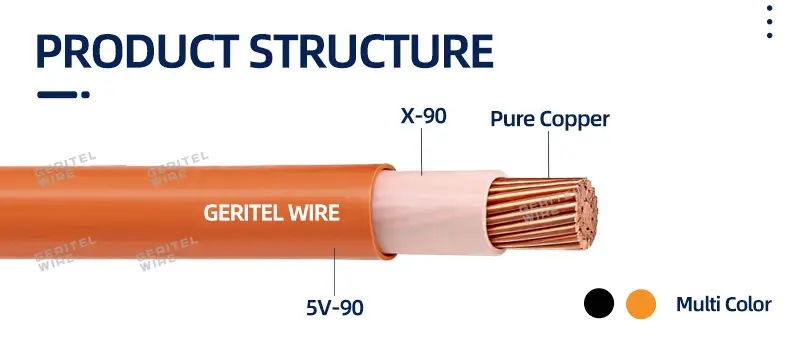
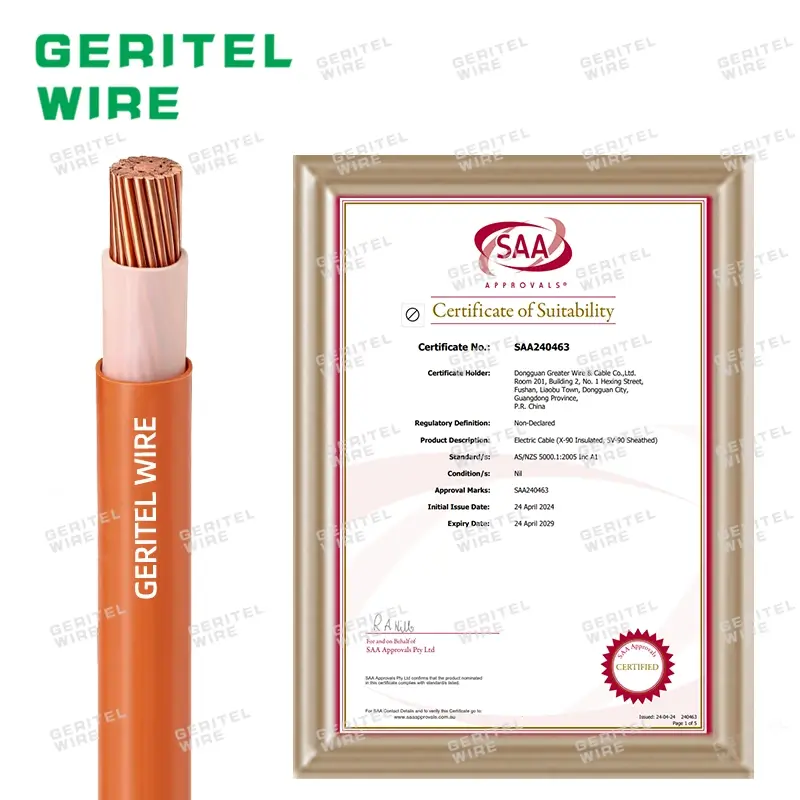
• Single-core orange power cables consist of a single conductor with insulation and an outer sheath. They are typically used for fixed installations where each conductor can be routed separately.
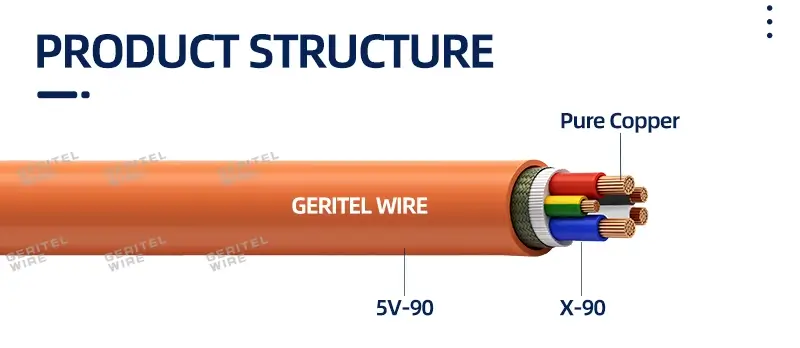
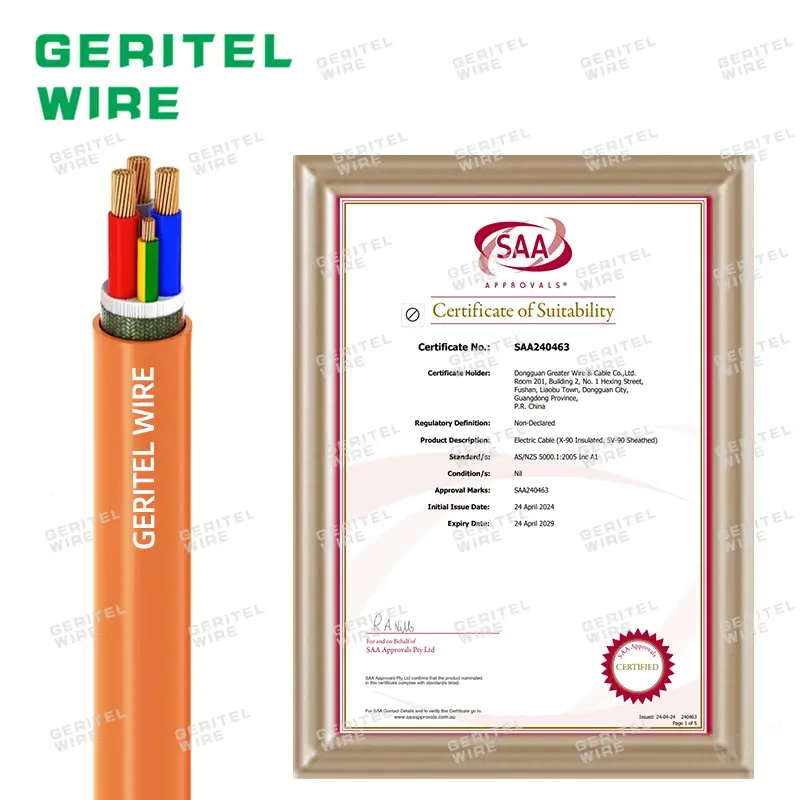
• Multi-core orange power cables contain multiple insulated conductors within a single outer sheath, designed for flexible installations and simplifying wiring in complex systems or multiple circuits.
Both types can be manufactured to meet AS/NZS 5000.1 orange circular cable and AS/NZS 5000.2 orange circular cable standards and are SAA certified, ensuring compliance with Australian electrical safety regulations. SAA certification guarantees that the cables have been rigorously tested for electrical performance, fire resistance, and durability, providing reliable protection for HVAC systems.
2. Installation Requirements
• Single-core cables are ideal for installations where conductors are routed separately, such as in large HVAC systems or industrial panels, allowing better heat dissipation.
• Multi-core cables are suitable for compact spaces or where multiple connections are required within a single run, reducing installation time and clutter.
3. Electrical Load and System Design
• Single-core cables allow designers to size each conductor individually according to load, making them suitable for high-current or high-power applications.
• Multi-core cables simplify circuit management and are convenient for multiple low-to-medium load circuits while maintaining safety and performance.
4. Environmental and Safety Considerations
• Multi-core orange power cables are easier to install in confined spaces, reducing the risk of installation errors.
• Single-core cables provide better heat dissipation and are preferred for long runs or high-current applications.
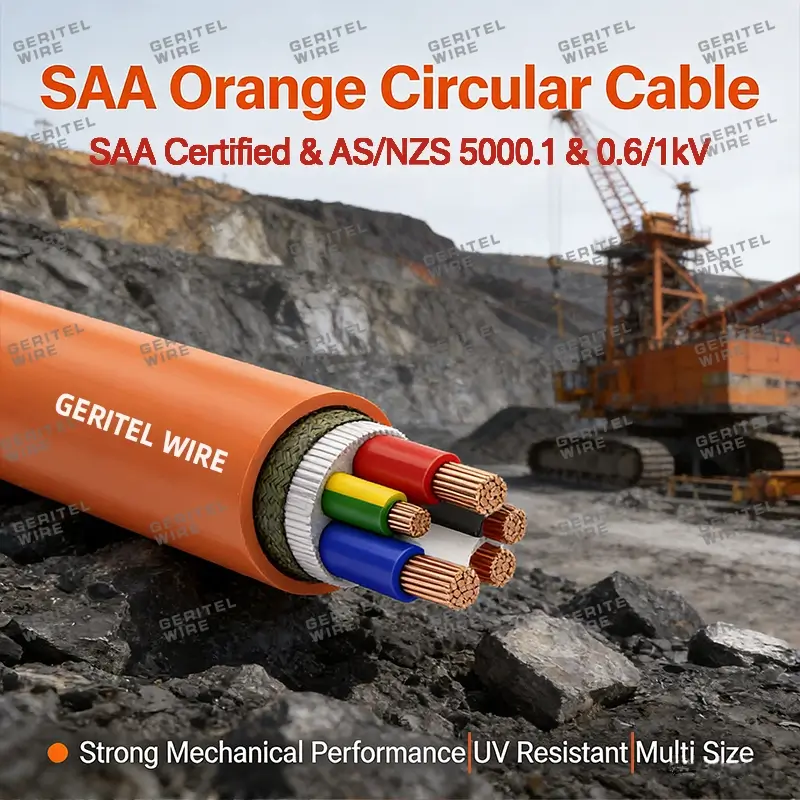
Regardless of type, using SAA-certified cables ensures excellent fire resistance, durability, and compliance with Australian standards. Certification not only validates product quality but also enhances project approval and customer confidence.
5. Conclusion
Choosing between single-core and multi-core orange power cables depends on installation environment, electrical load, and system complexity. Single-core cables are ideal for high-current and separately routed circuits, while multi-core cables save space and simplify wiring in compact systems.
Dongguan GERITEL Electrical Co., Ltd. offers high-quality AS/NZS 5000.1 and 5000.2 orange circular cables, all SAA certified, widely used in HVAC, industrial, and commercial applications, providing customers with safe, reliable, and efficient cable solutions.
Contact Us
Tel/Wechat/WhatsApp: +86 136 6257 9592
Email: manager01@greaterwire.com
Website: www.greaterwire.com
 0.6/1kV vs 450/750V Orange Power Cables: Which One Should You Use?



 Building 2, No. 40 Luxi 2nd Road, Liaobu Town, Dongguan City, Guangdong Province, China