


 Home
HomeEverything You Need to Know About UL44 Thermoset Insulated Wire
 GERITEL
 Mar 24,2026

In real engineering projects, the first question is never “what is this wire,” but “can it survive my installation conditions,” which is why UL44 thermoset insulated wire (such as XHHW-2,RHW-2 cables) is typically selected for industrial feeders, commercial building distribution, underground conduit runs, and wet locations, where elevated temperature and moisture exist simultaneously and long-term stability is required.
However, it is not always the right choice: for example, in applications requiring flexible cable routing, repeated bending, or exposed tray installations without conduit protection, other cable types may be more suitable, meaning UL44 wires are best understood as fixed-installation, high-reliability conductors rather than universal solutions.
From Parameters to Real-World Use: How Specs Translate into Decisions
Engineers do not choose cables by name—they choose them by how specifications translate into real operating behavior, and UL44 wires are a textbook example of this parameter-to-scenario relationship.
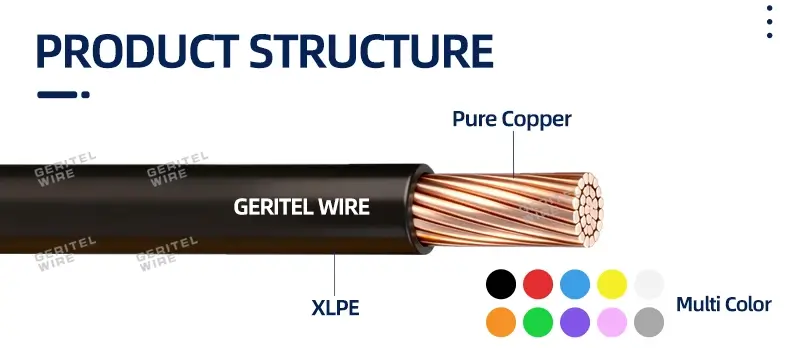
Insulation Type (XLPE / Thermoset) → Enables high thermal resistance and structural stability, making it suitable for high-load circuits and enclosed conduit systems where heat accumulation is a concern
Temperature Rating (75°C vs 90°C) → Determines whether the cable can handle continuous load in wet environments, directly affecting whether it is safe for underground or damp installations
Conductor Material (Copper vs Aluminum) → Impacts conductivity and installation cost, where copper is preferred for compact, high-efficiency systems, while aluminum is used for cost-sensitive large-scale distribution
Wire Size (AWG / kcmil) → Defines load capacity, meaning undersized wires lead to overheating, while oversized wires increase unnecessary cost
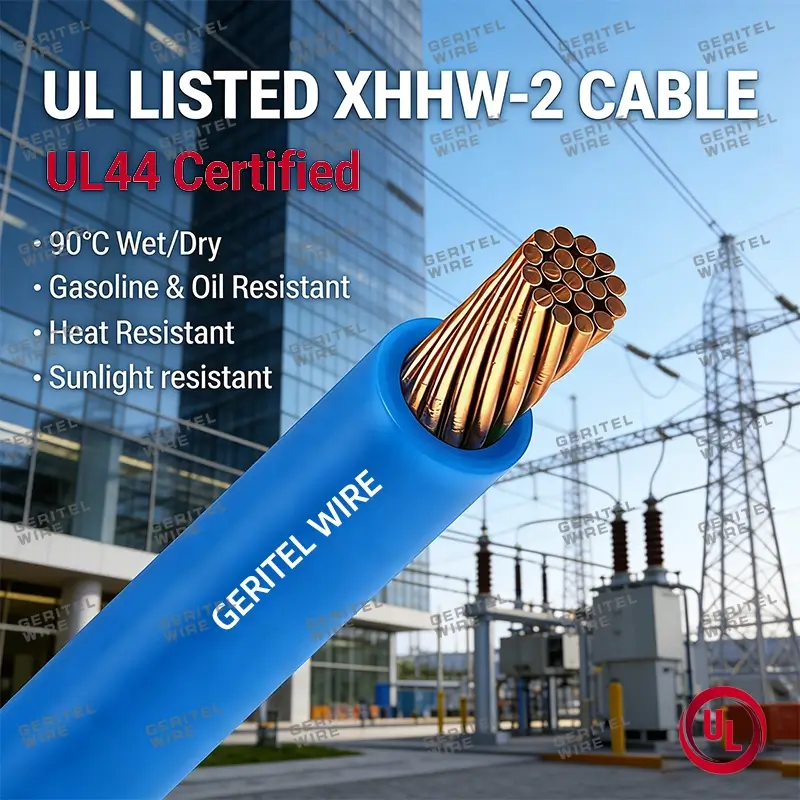
For instance, XHHW-2 building wire power cable , with its 90°C wet and dry rating, is typically chosen in projects where load stability and environmental uncertainty coexist, while standard XHHW may still be sufficient for controlled indoor environments with lower thermal stress.
Matching UL44 Wire to Different Project Types
Different industries and project scales require completely different specifications, even within the same UL44 category, which is why selection must always align with end-use scenarios rather than generic product descriptions.
Commercial Buildings → Prefer copper XHHW-2 for stable load and compact conduit layouts
Industrial Facilities → Often use larger size aluminum XHHW-2 for cost-effective power distribution
Underground Installations → Require moisture-resistant insulation and higher temperature tolerance, making XHHW-2 a safer default
Renewable Energy Projects → Demand long-term durability under fluctuating loads and environmental exposure
This layered selection logic is exactly what buyers are searching for when using keywords like “best wire for wet locations” or “XHHW-2 cable for industrial use”, because they are not just comparing products—they are matching solutions to risk profiles.、
What Happens If You Choose the Wrong Wire
In engineering terms, choosing the wrong cable is not a minor inefficiency—it is a failure mechanism waiting to happen, and the consequences often appear only after installation, when correction costs are highest.
Typical risks include:
Insulation Aging → Using lower temperature-rated wire in high-heat environments accelerates insulation degradation, reducing lifespan dramatically
Overheating and Overload → Incorrect wire size leads to excessive current density, causing heat buildup and potential fire hazards
Moisture Failure → Non-suitable insulation in wet or underground conditions results in water ingress, insulation breakdown, and eventual short circuit
Compliance Issues → Mismatched specifications may fail inspection, delaying project completion and increasing rework costs
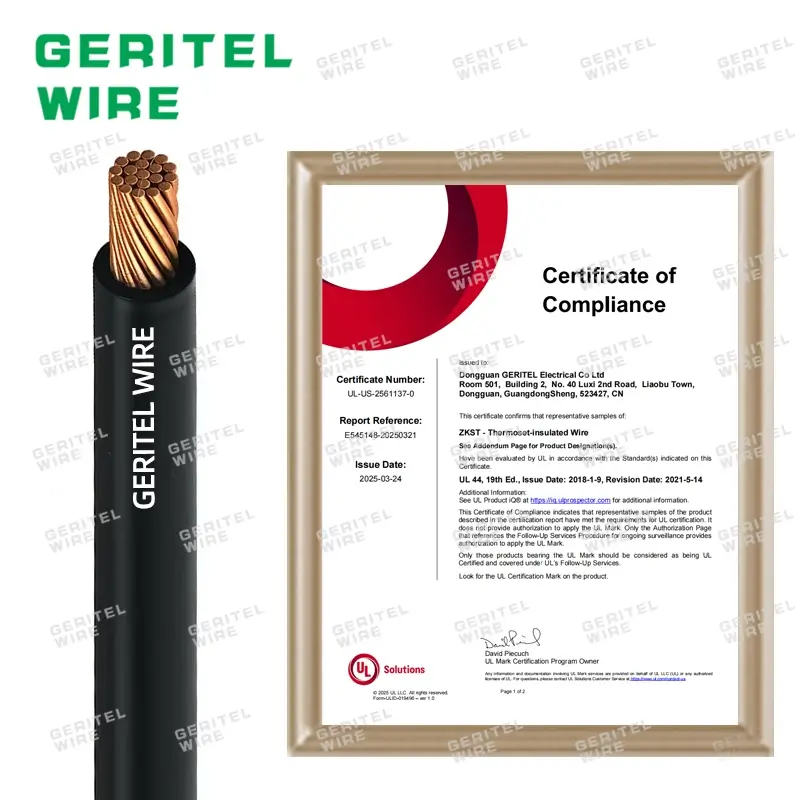
These are the exact reasons why experienced engineers prioritize UL-certified, application-matched cables, rather than selecting purely based on price or availability.
Final Decision Logic: How Engineers Actually Choose
In practice, engineers follow a simple but strict decision path:
- Define installation environment (wet, dry, underground, high temperature)
- Match insulation type and temperature rating
- Calculate load and select appropriate conductor size
- Balance material choice (copper vs aluminum) with budget
- Confirm certification and supplier reliability
UL44 thermoset insulated wire fits into this process as a high-reliability solution for demanding environments, rather than a default option for all use cases.
Get the Right Specification for Your Project
If your project involves uncertain environments, high load demands, or strict compliance requirements, selecting the correct UL44 wire specification early can prevent costly redesigns and safety risks later.
Instead of guessing between XHHW, XHHW-2, copper, aluminum, or different sizes, a more efficient approach is to define your load conditions, installation method, and environmental factors, and then match the exact specification accordingly.
If you are evaluating options or unsure which configuration best fits your project, you can share your application details—such as voltage level, installation environment, and load requirements—and a tailored recommendation can be provided to ensure both compliance and long-term performance.
Contact Us
Dongguan GERITEL Electrical Co., Ltd. offers high-quality XHHW-2, THHN, and THWN wires with UL44 certification, providing reliable and customized solutions for industrial, commercial, and residential projects.
Phone: +86 136 6257 9592
Email: manager01@greaterwire.com
Website: www.greaterwire.com
 What Does XHHW Mean in Electrical Wire?



 Building 2, No. 40 Luxi 2nd Road, Liaobu Town, Dongguan City, Guangdong Province, China