


 Home
HomeDjibouti Free Trade Zone Building Complex
 GERITEL
 Apr 13,2026

In early 2023, we received a cable procurement inquiry for a major infrastructure project in the Republic of Djibouti, East Africa. The Djibouti International Free Trade Zone (DIFTZ) Building Complex, a critical node of the Belt and Road Initiative in East Africa with a total investment exceeding $1.5 billion, encompasses logistics warehouses, administrative offices, commercial facilities, and new energy power systems. The project team faced typical power infrastructure challenges in a port city: high-temperature and high-humidity tropical desert climate, intense ultraviolet radiation, high salt-fog corrosion, and stringent requirements for power supply reliability.
The client's initial concerns centered on three levels: First, as a shipping hub connecting Asia, Africa, and Europe, Djibouti's port environment demanded exceptional mechanical strength and corrosion resistance from cables—ordinary cables typically develop jacket cracking within 3-5 years in salt-fog conditions. Second, the project included a large-scale rooftop photovoltaic system requiring DC solar cables meeting the latest international standards, yet local suppliers could not provide H1Z2Z2-K series products with TÜV certification. Third, the project timeline was extremely tight, with only 45 days from contract signing to first delivery, posing a severe test for supply chain responsiveness.
Needs Diagnosis & Customized Solutions: From Standard Products to System Integration
After our technical team conducted on-site surveys in Djibouti, we identified several blind spots in the client's cable selection approach. Many local engineers were accustomed to using ordinary PVC-jacketed cables, but in Djibouti's extreme arid environment—with annual precipitation below 200mm yet evaporation reaching 2,000mm—daily temperature swings could exceed 20°C. PVC materials are highly susceptible to micro-cracking under thermal expansion and contraction cycles, creating entry points for salt-fog penetration.
For the building complex's internal wiring systems, we recommended the H07V-U single-core wiring cable series, covering full specifications from 1×1.5 mm² to 1×16 mm². These cables with solid copper conductors offer excellent conductivity stability and termination convenience, particularly suitable for lighting and socket circuits in commercial buildings. For equipment connection scenarios requiring frequent movement or bending—such as tower cranes and concrete pump trucks—we configured H05V-K and H07V-K battery cables, ranging from 1×10 mm² to 1×50 mm². Their Class 5 fine-stranded copper conductor structure withstands over 5,000 bending cycles without damage. For multi-core flexible cables, the H05VV-F series (2×1.5 mm² to 5×2.5 mm²) were deployed for office equipment power connections, with their flat or round jacket designs facilitating neat installation in cable trays.
The external power supply system represented the focus of this supply contract. Considering Djibouti Port's year-round strong winds and sandstorms, ordinary non-armored cables face abrasion risks during outdoor aerial installation. We configured YJV non-armored power cables (4×120 mm² to 4×500 mm²) for the project's main power circuits, while employing SWA steel wire armored power cables (4×120 mm² to 4×500 mm²) at critical crossing and buried sections. The SWA structure's galvanized steel wire braiding provides compressive strength exceeding 2,000N, combined with our specially recommended PE (polyethylene) outer sheath and salt-fog resistant coating, ensuring over 30 years of seice life in seawater splash environments. Compared to ordinary aluminum-armored cables, this configuration carries approximately 15% higher unit price but reduces total maintenance costs by over 60%, truly achieving lifecycle economy.
Breakthrough in New Energy Systems: Deep Application of H1Z2Z2-K Solar Cables
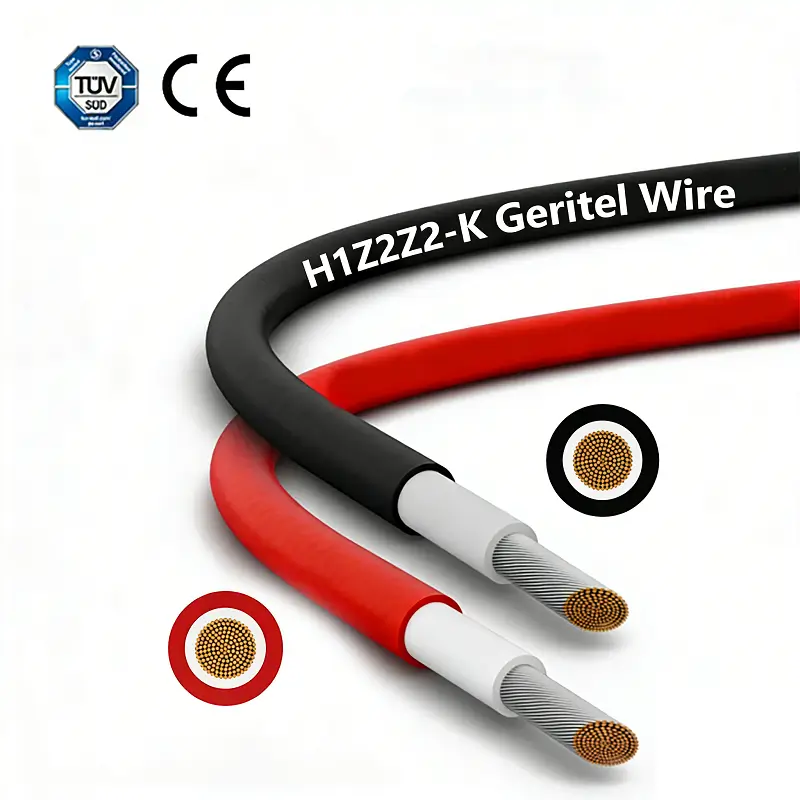
The project's highlight was its 5.2MW rooftop distributed photovoltaic system cable configuration—also the technical aspect of greatest concern to the client. According to IEC 62930 and EN 50618 standards, PV DC-side cables must withstand voltages up to 1,500V DC and maintain performance across extreme temperature ranges from -40°C to +90°C. Our H1Z2Z2-K 1×6 mm² solar cable became the core connection material for this system, with single-specification shipments reaching 18,500 meters for inter-module series connections and string-to-inverter DC busing. Additionally, H1Z2Z2-K 1×4 mm² shipments totaled 12,000 meters for low-power module connections, while H1Z2Z2-K 1×10 mm² reached 6,500 meters for partial main trunk lines.
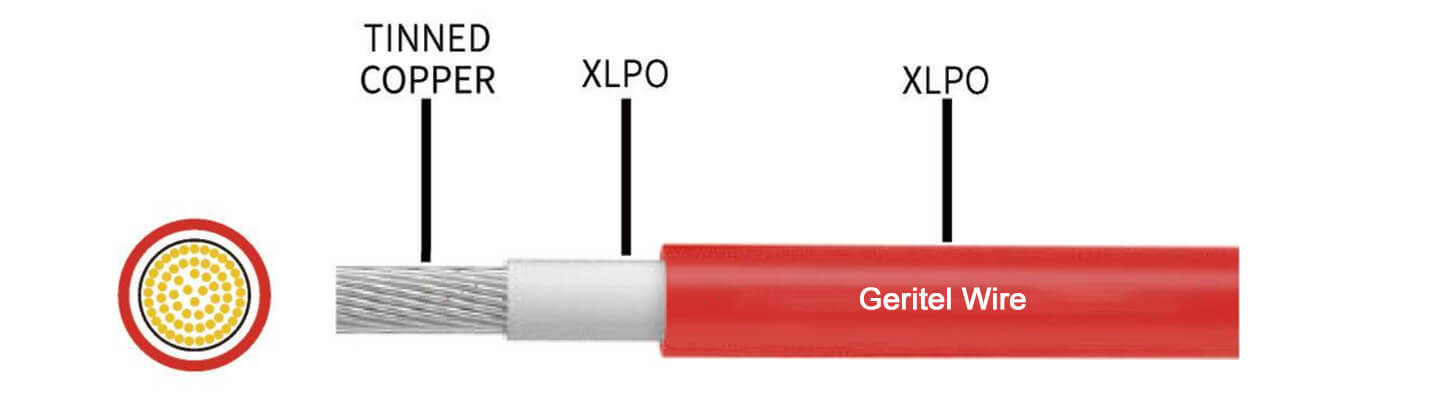
The technical advantage of H1Z2Z2-K 1×6 mm² lies in its double-layer irradiation cross-linked polyolefin (XLPO) insulation structure. Compared to traditional PVC insulation, XLPO materials demonstrate superior thermal aging resistance—capable of continuous operation for 20,000 hours at 120°C conductor temperature. Through electron beam irradiation cross-linking, molecular chains form three-dimensional network structures, giving the cable outstanding ozone and UV resistance. In Djibouti, where the UV index regularly exceeds 11, ordinary cable jackets may powder and crack within two years, while our H1Z2Z2-K series maintains over 80% retention of tensile strength and elongation after 720 hours (360 cycles) of UV aging testing.
The client had initially considered lower-priced PV1-F type solar cables, but our technical team detailed the critical differences: H1Z2Z2-K carries a 1,500V DC rating versus PV1-F's 1,000V DC, and with increasing PV module power density, system voltages are evolving toward 1,500V—selecting H1Z2Z2-K means reserving space for future technology upgrades. Furthermore, H1Z2Z2-K's halogen-free low-smoke (LSZH) properties achieve over 60% light transmittance in fire conditions, far exceeding PVC cables' 15%, which is crucial for personnel-dense logistics warehouse zones. Ultimately, the client approved this forward-looking selection proposal.
MV Distribution & Energy Storage System Integration
For the building complex's medium-voltage distribution segment, we provided XLPE-insulated medium-voltage power cables. The 10kV system employed single-core structures (1×240 mm² and 1×400 mm²), with three-core structures (3×150 mm² and 3×185 mm²) used for partial underground ring main unit connections. Single-core cable shipments reached 8,200 meters, while three-core cables totaled 3,600 meters. These cables utilize ultra-clean XLPE insulation compound with impurity content controlled below 50μm and partial discharge below 5pC, ensuring long-term insulation reliability in Djibouti's high-temperature environment.
As supporting infrastructure for the photovoltaic system, we similarly configured H1Z2Z2-K series cables for DC connections between battery clusters, leveraging their excellent chemical corrosion resistance—during EN 60811-404 standard testing, cable sheath performance retention exceeded 90% after 7 days immersion in oxalic acid and sodium hydroxide solutions, particularly important for energy storage scenarios with potential electrolyte leakage risks.
Deadline Dash: Full Supply Chain Stress Test Documentation
Upon contract signing, our greatest challenge was the 45-day delivery window. As a national-level priority project, any delay in the Djibouti Free Trade Zone would trigger cascading impacts. Our production dispatch center immediately activated emergency response protocols: H07V-U series (86,000 meters total) and H05VV-F series (24,000 meters total) were directly allocated from standing inventory at our Dongguan production base; YJV and SWA series (156,000 meters total) launched three-shift production, utilizing continuous casting and rolling processes to compress copper rod-to-finished cable production cycles to 7 days; H1Z2Z2-K series (37,000 meters total), as customized products, had their extrusion workshops complete mold preheating and process parameter setup while special XLPO materials were in transit from Germany, with production commencing within 24 hours of material arrival.
Quality control permeated the entire process. All products underwent 100% high-voltage testing before shipment (6.5kV AC/5 minutes for H1Z2Z2-K, 35kV AC/5 minutes for MV cables), with key indicators including conductor DC resistance, insulation thickness, and sheath mechanical properties certified by CNAS-accredited laboratories. We proactively provided notarized copies of full certification documentation including TÜV Rheinland, CE, EN 50618, and IEC 62930, cooperating with third-party inspection agency SGS for pre-shipment inspection to ensure smooth customs clearance.
For logistics, considering Djibouti Port's throughput capacity, we adopted mixed 20-foot and 40-foot container loading, with heavy cargo (armored cables) placed lower and light cargo (control cables) upper, each container's stowage professionally calculated to prevent reel deformation from maritime. Cargo departed from Shenzhen Yantian Port via the Indian Ocean route direct to Djibouti Port, with total maritime transit time of 18 days, completing customs clearance and delivery to the project site within 3 days of arrival—ultimately delivering 2 days ahead of contractual deadline.
Salt Fog and Scorching Sun Battlefield Report: Two Years of Zero-Failure Operation
By Q3 2024, the Djibouti Free Trade Zone Building Complex had achieved full operational status. Our cable system weathered two complete monsoon cycles: during the extreme heat period of July-September 2023 (maximum temperatures reaching 47°C), cable conductor temperature monitoring showed stable operating temperatures below 65°C, far below XLPE insulation's 90°C rating limit; during January 2024 sandstorms, SWA armored cables' PE sheaths demonstrated excellent abrasion resistance with zero sheath damage reports.
The project owner's chief electrical engineer specifically noted in acceptance evaluations that our H1Z2Z2-K 1×6 mm² solar cable demonstrated exceptional flexibility during actual installation, with minimum bending radius of only 5 times cable outer diameter (approximately 30mm), improving wiring efficiency in confined rooftop spaces by 40%. Simultaneously, the cable's tinned copper conductors showed zero oxidation or blackening in humid environments, with stable contact resistance—attributed to our advanced tinning process controlling plating thickness at 3-5μm, ensuring welding performance without compromising conductor flexibility.
From cost-effectiveness analysis, although our initial quotes were approximately 8-12% higher than local suppliers, comprehensive consideration of certification compliance (avoiding subsequent rectification risks), service life (30 years versus 15 years), and maintenance costs (zero maintenance versus 2% annual replacement rate) reduced the client's total cost of ownership (TCO) by 35% over a 10-year cycle. More importantly, our rapid delivery ensured on-schedule project commissioning, generating economic value far exceeding the cable procurement itself.
Three Defensive Barriers Competitors Cannot Replicate
Certification System Completeness constitutes our primary advantage over competitors. Beyond foundational certifications including TÜV, CE, EN, and IEC, we hold regional certifications such as SASO (Saudi Arabia), SONCAP (Nigeria), and PVOC (Kenya) for specific markets. For French-speaking African nations like Djibouti, our French-language test reports and conformity certificates can be directly filed with local standards bureaus, eliminating additional translation and certification costs for clients. All certifications are verifiable in real-time on issuer websites such as TÜV Rheinland, eliminating counterfeit certificate risks.
Engineering Experience Transferability forms our second defensive layer. Before undertaking the Djibouti project, we had completed cable supplies for similar port infrastructure projects including Egypt's Suez Canal Economic Zone, Morocco's Tanger-Med Port, and Kenya's Mombasa Port, with cumulative shipments exceeding 2,000 kilometers. Salt-fog environment application data accumulated from these projects enables us to provide clients with precise lifespan prediction models—based on Djibouti's salt-fog concentration (approximately 50mg/m³/day) and temperature data, we predict actual service life of SWA armored cables in this environment at 32-35 years, data incorporated into project operation and maintenance manuals as decision-making foundations for client asset management.
Flexible Supply Chain Responsiveness serves as the weapon for emergency projects. We operate two major production bases in Dongguan and Wuxi, with standing inventory exceeding 5,000 SKUs covering full specifications from 0.5mm² to 500mm². For standardized products such as solar cables, we support "zero minimum order quantity" meter-based sales, allowing clients to procure precisely according to actual installation lengths, reducing 5-8% wastage losses. Emergency order delivery cycles can be compressed to 7-10 days, supported by our overseas warehouse network (Dubai, Rotterdam, Los Angeles) enabling 48-hour delivery to major global ports.
Your Next Benchmark Project: Let's Define Industry Standards Together
The successful delivery of the Djibouti Free Trade Zone Building Complex project validates our professional capabilities in extreme-environment cable applications. From the precise selection of H1Z2Z2-K 1×6 mm² solar cables, to salt-fog protection design for SWA armored cables, to 45-day rapid delivery supply chain execution—every segment demonstrates our profound understanding of engineering requirements and quality commitment.
Whether you are planning port infrastructure, new energy power stations, or large-scale commercial complexes, cable system reliability is the cornerstone of project success. We sincerely invite you to contact the GERITEL team for customized cable solutions tailored to your project environment. Our engineers provide full-process technical support from selection calculations, short-circuit verification to installation guidance, ensuring your power system operates safely, efficiently, and economically throughout its lifecycle.
Dongguan GERITEL Electrical Co., Ltd.
Tel/WhatsApp/WeChat: +86 135 1078 4550 / +86 136 6257 9592
Email: manager01@greaterwire.com
 Burundi Rural Electrification PV Project



 Building 2, No. 40 Luxi 2nd Road, Liaobu Town, Dongguan City, Guangdong Province, China