


 Home
HomeDifferences Between THHN & THWN Wire
 GERITEL
 Mar 25,2026

Choosing the right building wire is a critical decision that directly impacts electrical safety, code compliance, and long-term system reliability. In real-world projects, THHN wire and THWN wire are among the most commonly used conductors, yet they are often confused due to their similar appearance and naming. This article clearly explains the differences between THHN and THWN, helping electricians, contractors, and buyers eliminate selection confusion and ensure safe, compliant installations.
1. What Do THHN and THWN Mean?
Understanding the naming is the first step toward proper selection.
- THHN wire: Thermoplastic High Heat-Resistant Nylon-Coated
- THWN wire: Thermoplastic Heat and Water-Resistant Nylon-Coated
Both are widely used UL certified building wire types designed for general-purpose electrical wiring, including the THHN electrical cable UL listed.
The key distinction lies in their performance focus:
- THHN wire is optimized for high-temperature resistance in dry environments
- THWN wire is designed for both heat and water resistance, making it suitable for wet locations
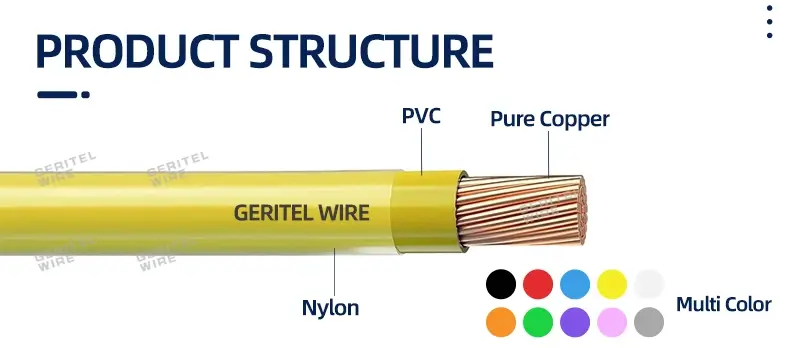
2. Product Structure Overview
Although THHN wire and THWN wire look nearly identical, their internal material formulations differ in ways that affect performance.
Basic Structure
Both wires consist of:
- Copper (or aluminum) conductor
- PVC insulation layer (with different additives)
- Nylon jacket (outer sheath)
The nylon coating provides mechanical strength, abrasion resistance, and protection against oil and chemicals, while the PVC insulation determines heat and moisture performance. Specifically, the THHN nylon insulated copper wire features a copper conductor wrapped in heat-resistant PVC insulation and a durable nylon jacket, enhancing its performance in dry, high-temperature settings.
- THHN wire insulation focuses on heat resistance
- THWN wire insulation includes water-resistant additives, improving durability in wet conditions
3. Key Differences Between THHN and THWN (Quick Comparison)
To help you quickly understand the differences between THHN and THWN, here is a clear side-by-side comparison:
| Comparison Item | THHN Wire | THWN Wire |
| Full Name |
Thermoplastic High Heat-Resistant Nylon-Coated |
Thermoplastic Heat and Water-Resistant Nylon-Coated |
| Conductor | Copper / Aluminum | Copper / Aluminum |
| Insulation | PVC (heat-resistant formulation) | PVC (water-resistant formulation) |
| Outer Jacket | Nylon | Nylon |
| Temperature Rating (Dry) | 90°C | 90°C (THWN-2) |
| Temperature Rating (Wet) | Not suitable | 75°C / 90°C (THWN-2) |
| Water Resistance | ❌ No | ✅ Yes |
| Moisture Resistance | Moderate | Excellent |
| Oil Resistance | Good | Good |
| Voltage Rating | 600V | 600V |
| Typical Applications | Indoor dry locations | Wet, outdoor, underground |
| Standard | UL 83 | UL 83 |
| Versatility | Limited | Higher (especially THWN-2) |
4. UL Certification Explained
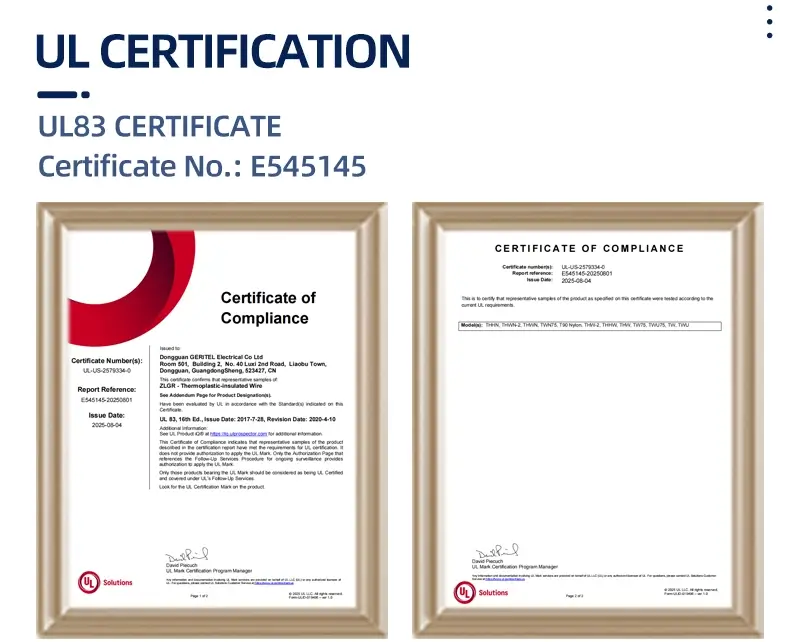
Both THHN wire and THWN wire comply with UL 83, a key standard for thermoplastic-insulated wires in North America.
What UL Certification Means
- Verified electrical safety and insulation performance
- Tested for temperature resistance and durability
- Required for inspection approval and engineering compliance
THHN, THWN, and THHN/THWN-2
- THHN: Rated for dry, high-temperature environments
- THWN: Rated for wet conditions (typically 75°C)
- THHN/THWN-2 (Dual Rated):
- Supports 90°C in both wet and dry environments
- Most widely used in modern projects
In practice, dual-rated THHN/THWN-2 wire is the preferred choice because it simplifies inventory and ensures compliance across different environments.
5. Practical Selection Guide
Selecting the right wire depends on the installation environment and project requirements.
- Indoor Dry Locations
Choose THHN wire for applications such as control panels, cable trays, and residential indoor wiring, where moisture exposure is minimal—this includes the THHN wire for conduit installation, which is well-suited for being run through conduits in dry indoor spaces due to its nylon jacket’s abrasion resistance.
- Outdoor or Wet Locations
Use THWN wire or preferably THWN-2, which is designed to handle water exposure, humidity, and underground conditions.
- Industrial Applications
Select THWN or dual-rated THHN/THWN-2, as these environments often involve moisture, oil, and mechanical stress.
- Residential Projects
The safest and most convenient option is THHN/THWN-2 dual-rated wire, which reduces the risk of incorrect selection and ensures full compliance.
6. Conclusion & Product Recommendation
Understanding the differences between THHN and THWN is essential for making safe and cost-effective wiring decisions. While THHN wire performs best in dry, high-temperature environments, THWN wire offers superior protection in wet and demanding conditions. For most modern installations, THHN/THWN-2 dual-rated wire provides the highest flexibility and reliability.
If you are looking for high-quality, reliable UL certified building wire, choosing the right manufacturer is just as important as selecting the correct specification.
Dongguan GERITEL Electrical Co., Ltd. specializes in manufacturing premium THHN and THWN wires with:
- High-purity copper conductors for stable conductivity
- Optimized PVC insulation for heat and moisture resistance
- Durable nylon jacket for enhanced protection
- Strict compliance with UL standards
- Wide application across residential, commercial, and industrial projects
Contact us today:
Dongguan GERITEL Electrical Co., Ltd.
Tel / WhatsApp / WeChat: +86 135 1078 4550 / +86 136 6257 9592
Email: manager01@greaterwire.com
Get in touch with us today for detailed product information, competitive pricing, or free samples. Let us help power your next project with safe, durable, and fully compliant wiring solutions you can trust.
 THHN vs THWN-2 Cable: Differences and Selection Tips



 Building 2, No. 40 Luxi 2nd Road, Liaobu Town, Dongguan City, Guangdong Province, China