


 Home
HomeCommon Mistakes When Installing XHHW-2 Wire in Commercial Buildings
 GERITEL
 Jul 10,2026

Commercial building electrical wiring requires strict compliance with NEC and UL 44 codes to ensure long-term operational safety, fire resistance, and inspection pass rates. As a premium thermoset insulated building wire, UL 44 Thermoset Insulated Wire XHHW-2 outperforms ordinary PVC wires in temperature resistance, moisture resistance, and mechanical durability. Yet improper installation practices easily neutralize its technical advantages, leading to overheating, insulation damage, hidden leakage risks, and project rework. Many on-site teams rely on experience rather than official technical references, ignoring authoritative Copper XHHW-2 Wire Ampacity Table parameters and standardized Copper XHHW-2 Wire PDF installation guidelines. Working with a professional Copper XHHW/XHHW-2 Wire Manufacturer and reliable Copper XHHW-2 Cable Supplier is only half the battle; standardized construction is the key to maximizing XHHW-2 wire performance in commercial projects.
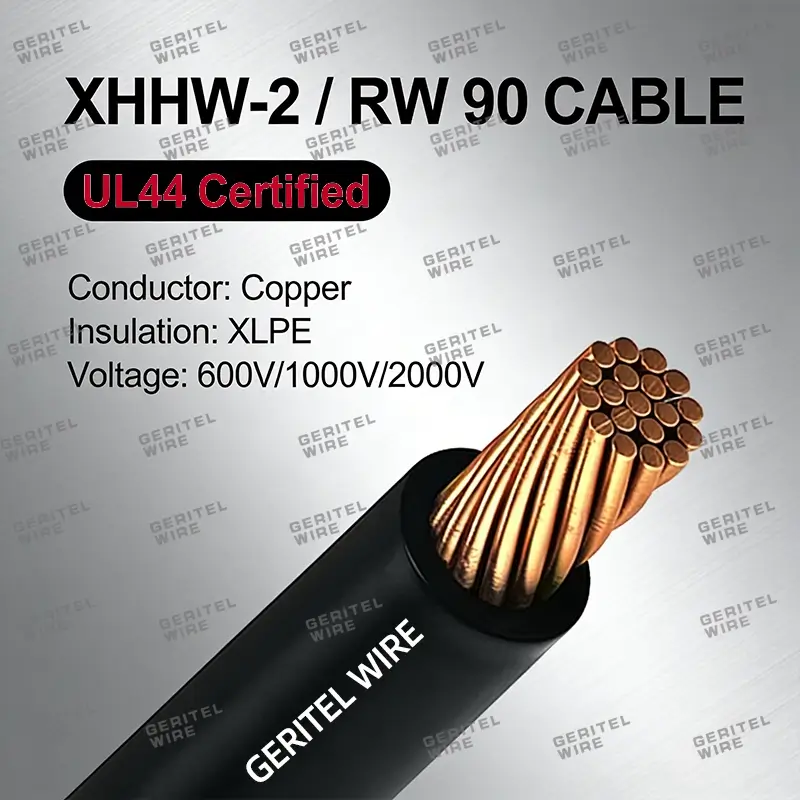
1. Blind Wire Sizing Without Referencing XHHW-2 Ampacity Tables
One of the most common and dangerous installation mistakes in commercial buildings is selecting wire gauge based solely on experience, without checking the official Copper XHHW-2 Wire Ampacity Table. Many electricians use standard ampacity values without calculating mandatory derating factors caused by high ambient temperatures, conduit bundling, and long-distance heat accumulation in enclosed commercial ceilings and wall cavities.
XHHW-2 wire’s safe current load changes significantly after temperature and bundle correction. Ignoring official ampacity data leads to under-sized wiring, continuous overload operation, insulation softening, and accelerated aging. For all commercial branch and feeder circuit design, contractors must refer to the latest Copper XHHW-2 Wire PDF technical datasheet and UL 44 ampacity standards to match wire size with actual circuit load, eliminating long-term fire hazards.
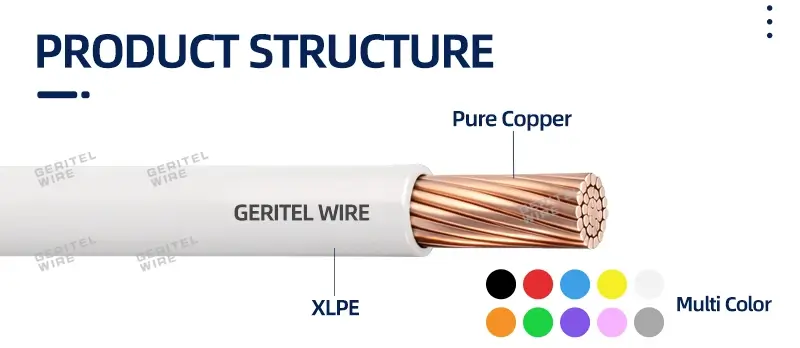
2. Exceeding Conduit Fill Ratio and Over-Bundling Wires
Commercial projects often require dense wiring for lighting, sockets, and HVAC systems, leading many teams to overfill conduits and cable trays to save construction time. This violates core installation rules for UL 44 Thermoset Insulated Wire XHHW-2. Excess bundled wires cause severe heat accumulation, reduce natural heat dissipation, and force continuous high-temperature operation beyond the wire’s design tolerance.
Overcrowded conduits also increase friction during wire pulling, scratching the XLPE insulation layer and creating invisible damage. Even high-quality products supplied by professional Copper XHHW/XHHW-2 Wire Manufacturer will suffer performance degradation under long-term over-filled installation. Strictly following NEC conduit fill standards ensures stable ampacity retention and extends wire service life.
3. Insufficient Bending Radius and Mechanical Insulation Damage
XHHW-2’s thermoset XLPE insulation delivers excellent heat resistance, but it is sensitive to sharp bending and violent extrusion. A typical commercial installation error is over-bending wires during corner routing, wall penetration, and conduit transition, failing to meet the minimum bending radius requirements specified in Copper XHHW-2 Wire PDF documents.
Too-small bending angles squeeze internal copper strands and deform the insulation structure, causing hidden cracks that expand under long-term temperature cycling. Unlike rigid industrial cables, commercial XHHW-2 wiring involves numerous short-distance bends, making mechanical damage highly frequent. Contractors must avoid hard pulling and sharp bending to protect insulation integrity and maintain the wire’s original voltage and temperature resistance performance.
4. Ignoring Ambient Temperature Derating in Enclosed Commercial Spaces
Most commercial buildings feature enclosed ceiling cavities, tight shaft spaces, and indoor hot equipment zones with ambient temperatures far higher than the standard 30°C test environment. Many installers directly use the base values from the Copper XHHW-2 Wire Ampacity Table without temperature correction, resulting in virtual overload operation.
UL 44 Thermoset Insulated Wire XHHW-2 supports 90°C maximum operating temperature, but continuous high ambient heat reduces its actual safe ampacity. Without proper derating, wires will overheat during peak power consumption periods, leading to tripping faults and accelerated insulation aging. Professional installation requires combining on-site environmental conditions with official PDF technical guidelines for accurate ampacity adjustment.
5. Non-Standard Wire Termination and Connection Handling
Poor terminal connection is the leading cause of circuit heating faults in commercial XHHW-2 wiring projects. Common mistakes include inconsistent stripping length, unpolished wire strands, improper crimping terminals, and simple tape wrapping instead of standardized insulation restoration.
Unstable terminals increase contact resistance, generating concentrated heat during current transmission and gradually burning insulation at wire ends. Even high-quality wires from a qualified Copper XHHW-2 Cable Supplier will fail early due to unprofessional termination. All connection operations must follow UL and NEC termination standards to ensure stable conductivity and complete insulation protection.
6. Mixing Wire Grades and Disregarding Certified Specifications
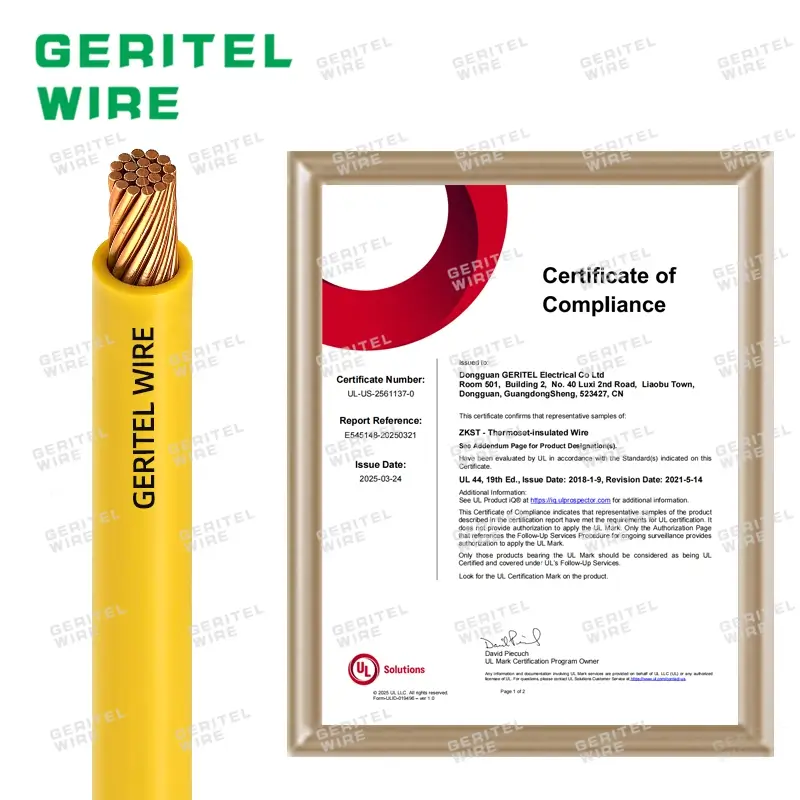
To cut costs, some construction teams mix ordinary building wires with standard UL 44 Thermoset Insulated Wire XHHW-2 in the same commercial circuit, or purchase non-certified substitute wires that lack official Copper XHHW-2 Wire PDF verification files. This practice directly causes inspection failure and serious safety risks.
Genuine XHHW-2 wire from a formal Copper XHHW/XHHW-2 Wire Manufacturer features exclusive XLPE thermoset insulation, strict batch testing, and complete certification documents. Non-standard substitutes cannot match the heat resistance, moisture resistance, and aging resistance of genuine XHHW-2 wire, failing to adapt to long-term commercial building operation requirements.
Key Standardized Fixes for Commercial XHHW-2 Installation
- Always design and size wires based on the officialCopper XHHW-2 Wire Ampacity Table with full temperature and bundling derating calculation
- Strictly control conduit fill density and avoid over-bundling to reserve sufficient heat dissipation space
- Follow minimum bending radius rules and prohibit violent pulling or sharp-angle bending
- Standardize wire stripping, crimping, and termination processes to eliminate connection heating risks
- Adopt only certified UL 44 Thermoset Insulated Wire XHHW-2 with complete Copper XHHW-2 Wire PDF technical files
- Cooperate with reliable Copper XHHW/XHHW-2 Wire Manufacturer and Copper XHHW-2 Cable Supplier for consistent batch quality
FAQ About XHHW-2 Wire Installation in Commercial Buildings
Q1: Why do most XHHW-2 wire overheating faults occur in commercial buildings?
A: Most faults are caused by human error, including ignored ampacity derating, overfilled conduits, poor heat dissipation, and non-standard terminations, rather than product quality issues. Strictly referencing the Copper XHHW-2 Wire Ampacity Table and installation specifications can avoid 90% of hidden risks.
Q2: Is the Copper XHHW-2 Wire PDF technical guide necessary for on-site construction?
A: Yes. The official Copper XHHW-2 Wire PDF contains authoritative parameters such as insulation thickness, bending radius, temperature resistance range, and standard ampacity, serving as the core basis for standardized commercial installation and project inspection.
Q3: What are the advantages of UL 44 Thermoset Insulated Wire XHHW-2 for commercial projects?
A: UL 44 Thermoset Insulated Wire XHHW-2 features high-temperature resistance, anti-aging performance, moisture and corrosion resistance, adapting to long-term continuous operation and complex enclosed environments in commercial buildings, far exceeding ordinary building wire stability.
Professional Copper XHHW-2 Wire Manufacturer & Supplier
Dongguan GERITEL Electrical Co., Ltd. is a professional and trustworthy Copper XHHW/XHHW-2 Wire Manufacturer and Copper XHHW-2 Cable Supplier focused on commercial and industrial electrical wiring solutions. We supply standard UL 44 Thermoset Insulated Wire XHHW-2 with full specifications, complete UL certification, stable batch consistency, and strict quality control.
We provide official Copper XHHW-2 Wire Ampacity Table data and downloadable Copper XHHW-2 Wire PDF technical datasheets to support contractors in standardized design, installation, and project filing. Our XHHW-2 wires are widely used in office buildings, shopping malls, hotel facilities, and various commercial construction projects, helping clients avoid installation mistakes, improve inspection pass rates, and ensure long-term system operational safety.
Contact Information
Dongguan GERITEL Electrical Co., Ltd.
Tel/WhatsApp/Wechat: +86 136 6257 9592
Tel/WhatsApp/Wechat: +86 135 1078 4550
Email: manager01@greaterwire.com
Website: www.geritelgroup.com
 How Contractors Choose Reliable XHHW-2 Wire Suppliers for Projects



 Building 2, No. 40 Luxi 2nd Road, Liaobu Town, Dongguan City, Guangdong Province, China