


 Home
HomeChoosing the Best 600V Building Wire for Commercial Projects
 GERITEL
 Mar 24,2026

At the procurement stage of a commercial electrical project, the real challenge is not simply selecting a 600V building wire, but identifying a solution that aligns with your specific load requirements, installation methods, and environmental conditions, because office buildings, retail spaces, and industrial facilities all impose very different performance expectations on electrical wiring.
This is why many buyers search for terms like “best 600V building wire for commercial projects” or “which 600V wire is suitable for conduit systems,” as the initial selection directly influences the long-term safety and reliability of the entire system.
Insulation Defines Application Boundaries in Real Installations
Among all technical parameters, insulation type plays the most decisive role, because it determines where the wire can be safely and effectively used.
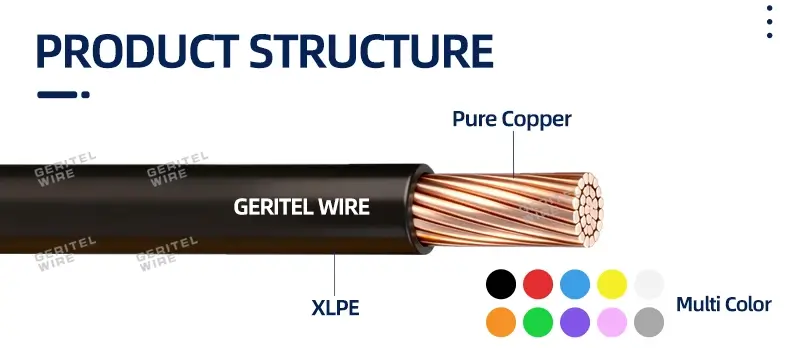
For instance, THHN/THWN-2 wire, with PVC insulation and a nylon jacket, is widely used in dry or moderately damp indoor environments, making it a cost-effective choice for standard commercial conduit wiring; however, when your project involves higher temperatures, continuous heavy loads, or wet locations, XHHW-2 wire with XLPE insulation becomes the more reliable option due to its superior heat resistance and moisture protection.
In practical terms, insulation is not just a specification—it defines the operational limits of the wire, and exceeding those limits will significantly reduce performance and lifespan.
Temperature Rating Directly Impacts System Stability Over Time
Temperature rating is often underestimated, yet it is one of the most critical factors in determining long-term performance, especially in commercial systems that operate continuously rather than intermittently.
XHHW-2 600V wire rated at 90°C in both wet and dry conditions can handle higher ampacity and maintain stable performance under sustained loads, which is essential for distribution systems, HVAC equipment, and power circuits, whereas lower-rated wires may experience insulation stress, accelerated aging, and overheating risks when operating near their limits.
Therefore, understanding temperature ratings is not just about compliance, but about ensuring durability and reducing maintenance costs over time.
Copper or Aluminum: A Strategic Balance Between Cost and Performance
When it comes to conductor material, the decision between copper and aluminum should be based on application needs rather than price alone, because each material serves a different purpose in commercial installations.
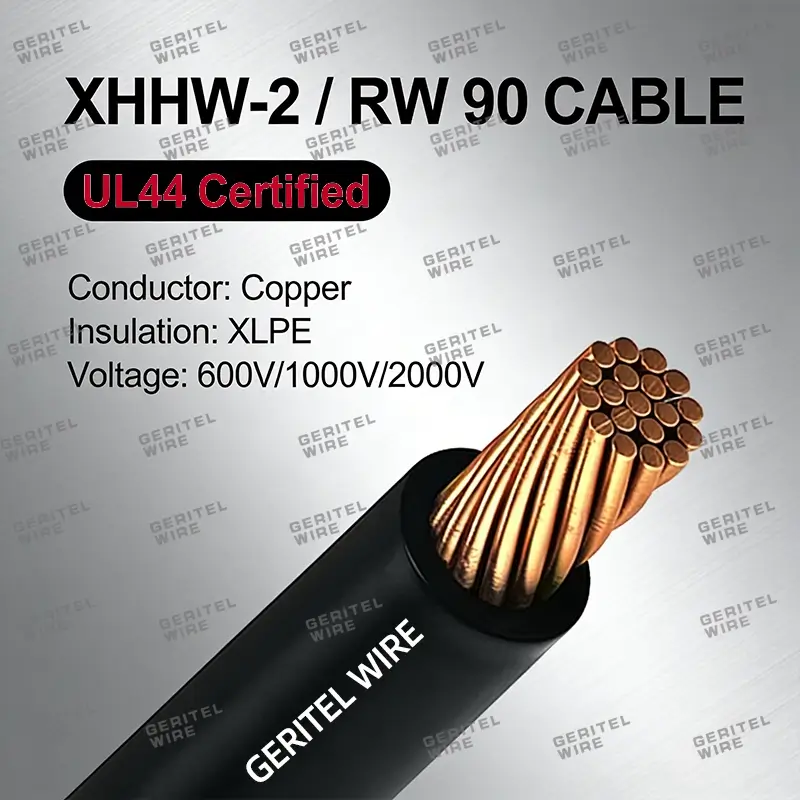
Copper offers higher conductivity, better flexibility, and more reliable connections, making it ideal for critical circuits and complex systems where performance cannot be compromised, while aluminum provides a cost advantage and lighter weight, which is beneficial for large-scale power distribution projects.
However, improper application of aluminum conductors without correct sizing and termination can lead to increased resistance, overheating, and connection issues, which is why this choice must be carefully aligned with engineering requirements.
Wire Sizing Is Not Just Technical—It’s a Safety Decision
Selecting the correct wire size is one of the most important steps in ensuring both safety and efficiency, because every load condition requires a properly matched conductor size.
Smaller gauges may be suitable for lighting and branch circuits, while larger sizes are necessary for feeders and heavy equipment, and any mismatch between load and wire size can result in voltage drop, overheating, or energy loss.
This is why many professionals actively look for “600V wire size for commercial load calculation,” as accurate sizing ensures compliance, performance, and long-term system stability.
The Hidden Consequences of Choosing the Wrong Wire
Incorrect wire selection rarely causes immediate failure, but instead creates risks that gradually escalate over time.
Using the wrong insulation type can lead to cracking, moisture ingress, or premature aging; insufficient temperature ratings can result in overheating under continuous load; and incorrect conductor material or sizing can cause voltage instability, connection failures, or even safety hazards.
Additionally, non-certified or inconsistent-quality wires may fail inspections, delay project timelines, and increase overall costs, making proper selection a critical factor not only technically, but also commercially.
How to Make a Reliable and Efficient Selection
The best XHHW-2 XLPE electric 600V building wire is not defined by a single feature, but by how well insulation type, temperature rating, conductor material, and wire size are matched to your actual project conditions.
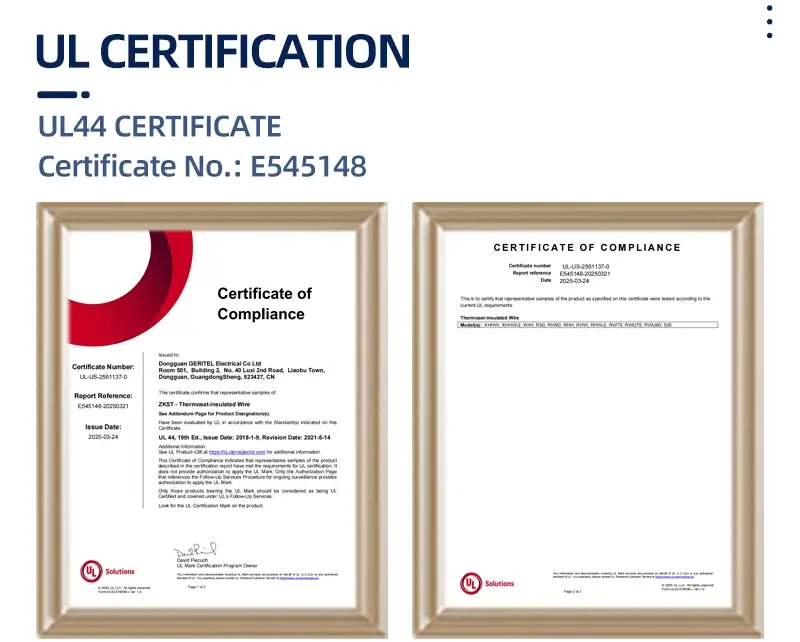
Partnering with a professional manufacturer that offers certified products, consistent quality, and technical expertise can significantly reduce uncertainty, especially in complex or large-scale commercial projects where precision matters.
Reduce Uncertainty with Expert Guidance
For projects involving multiple environments and varying load conditions, making the right choice from the beginning can save substantial time and cost later in the project lifecycle.
By sharing key project details—such as load requirements, installation methods, and environmental conditions—you can receive a tailored wire solution that ensures compliance, performance, and long-term reliability, helping you avoid costly mistakes and optimize your investment.
Contact Us
Dongguan GERITEL Electrical Co., Ltd. offers high-quality XHHW-2, THHN, and THWN wires with UL44 certification, providing reliable and customized solutions for industrial, commercial, and residential projects.
Phone: +86 136 6257 9592
Email: manager01@greaterwire.com
Website: www.greaterwire.com
 Electrical Contractor Guide to XHHW-2 and RHW-2 Cable



 Building 2, No. 40 Luxi 2nd Road, Liaobu Town, Dongguan City, Guangdong Province, China