


 Home
HomeChina-Aid Tonga Wind Power Project
 GERITEL
 Apr 08,2026

Tonga's diesel-dependent grid was bleeding foreign exchange reserves and exposing the island nation to fuel price volatility. The China-aided wind farm represented a strategic pivot: 25% of national renewable energy capacity, 3.8% of total grid supply, and a physical proof point for the Kingdom's 70% renewable target by 2030.
But Pacific Island infrastructure projects carry brutal failure rates. Salt corrosion, cyclone exposure, and logistics complexity destroy timelines and budgets. The project consortium needed cables that wouldn't become the weak link.
Client Pain Points: Three Deal-Breakers
When the EPC contractor approached us, their requirements were non-negotiable:
1. Regulatory Lockout Risk
No SAA certification = no customs clearance = project delay penalties. AS/NZS compliance was mandatory for Tonga's grid code, inherited from Australian/New Zealand electrical standards.
2. Fire Safety Liability
The 110kV switch station required Fire Rated Cable maintaining circuit integrity under fire conditions. Failure here meant operational permit denial and catastrophic grid vulnerability.
3. Total Cost of Ownership
Previous Pacific projects learned hard lessons: cheap cables with poor UV resistance or moisture sealing required replacement within 5 years. In Tonga, where technician mobilization costs $15,000+ per visit, "savings" become massive liabilities.
Technical Solution: Five Cable Systems, Zero Compromises
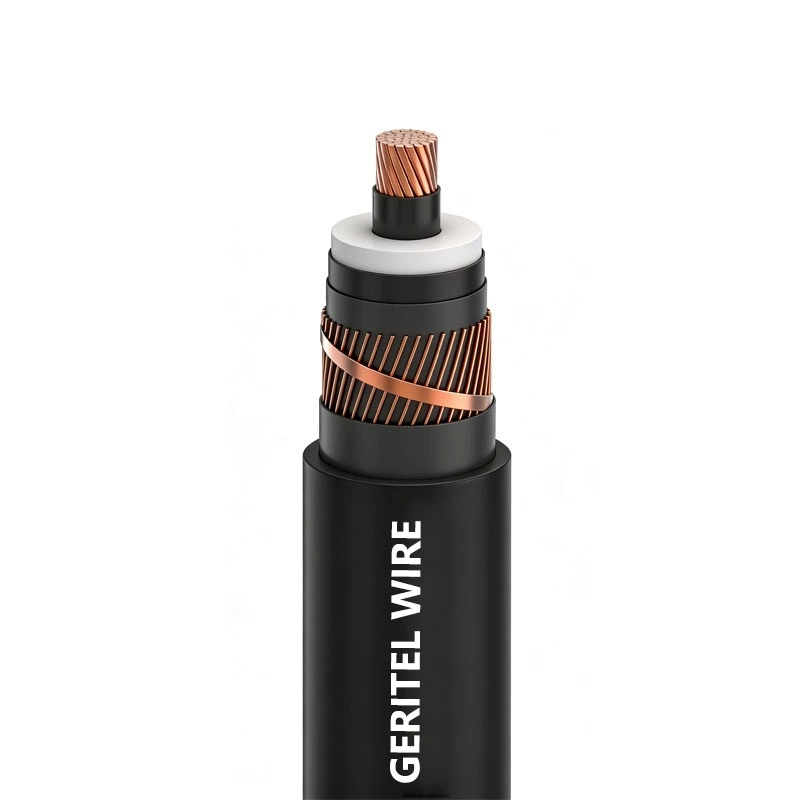
11–33kV XLPE MV Cable | Primary Power Transmission
Application: Turbine-to-switch station collector system
Specifications: 240mm² and 400mm² copper conductors, XLPE insulated, SWA armored
Why This Won the Spec:
XLPE delivers 90°C continuous rating versus 75°C for PVC alternatives. In tropical nacelles hitting 50°C+ ambient, that thermal margin prevents insulation degradation. The cross-linked molecular structure resists environmental stress cracking from Tonga's high humidity and salt air—failure modes that destroy thermoplastic cables in 3-4 years.
We sized conductors for 2.25MW combined turbine output with voltage drop margins under 2%, ensuring power quality at the 110kV interconnection point.
Elastomer Cable | Flexible Power & Control
Application: Nacelle pitch systems, yaw drives, auxiliary power
Specifications: 25mm²–35mm², X-HF-110 irradiated LSZH insulated, HFS-110-TP LSZH sheathed
Key Property: -25°C to +85°C flexibility range
Standard PVC hardens and cracks under combined UV/ozone exposure and mechanical vibration. Our Elastomer Cable maintains 300% elongation after 10-year equivalent weathering tests. For moving components cycling 20+ times daily, fatigue resistance isn't optional—it's survival.
The X-HF-110 irradiated low-smoke halogen-free insulation delivers superior thermal stability and reduced smoke emission under fire conditions, while the HFS-110-TP low-smoke halogen-free sheathing provides enhanced mechanical protection and environmental resistance critical for offshore wind applications.
Instrumentation Cable | SCADA & Sensor Networks
Specifications: 1.5mm²–2.5mm², individually screened pairs, overall tinned copper braid
Critical Feature: Low-capacitance XLPE insulation for 500m+ transmission distances
Signal integrity determines turbine availability. Poor shielding creates electromagnetic interference from power cables, generating false alarms and unnecessary maintenance shutdowns. Our Instrumentation Cable specification achieved >80dB screening effectiveness, eliminating data corruption risks.
Earthing Cable | Safety Grounding Grid
Specifications: 70mm²–95mm², high-conductivity annealed copper, heavy-duty PVC
AS/NZS Reference: 5000.1 compliant
Tonga's volcanic soil chemistry accelerates copper corrosion. We specified anti-termite, anti-rodent, saline-resistant sheathing with 2.5mm wall thickness—double standard commercial grade. The grounding system maintains <1Ω resistance across the 12-hectare site, critical for lightning protection in a region averaging 15 strikes per km² annually.
Fire Rated Cable | Emergency Systems Integrity
Application: Switch station fire detection, alarms, emergency lighting, smoke extraction
Specifications: 10mm²–16mm², mica tape wrapped, LSZH sheathed
Fire Performance: 90-minute circuit integrity at 950°C
Fire Rated Cable selection addressed the single point of failure threatening the entire project: switch station destruction. LSZH (Low Smoke Zero Halogen) formulation eliminates toxic halogen gas emissions during combustion—essential for enclosed electrical buildings where personnel evacuation depends on visibility and breathable air.
Our Difference: Beyond the Product
Certification Velocity
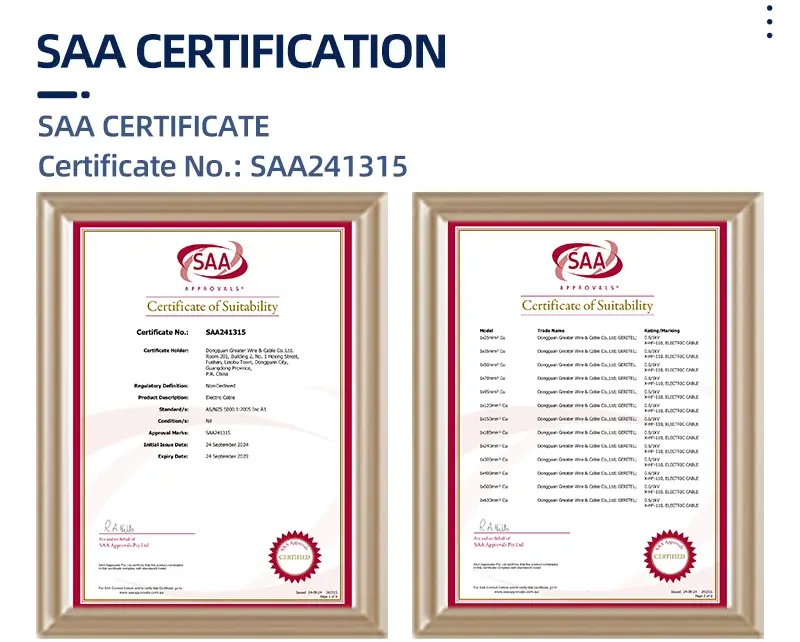
Our SAA accreditation covered the complete AS/NZS 5000 series, and 3191 standards. This eliminated third-party testing delays that typically add 8-12 weeks to Pacific projects. We provided complete conformity documentation packages, enabling same-day customs clearance upon Port of Nuku'alofa arrival.
Regional Expertise
We'd supplied cables for three previous Pacific wind and solar projects. This institutional knowledge prevented specification errors: recognizing that Tonga's aggregate quality issues would require direct-buried cable routing rather than ducted installation, we upgraded armor specifications proactively without client request or cost premium.
Manufacturing Control
Vertical integration meant 45-day delivery cycles versus 90+ days for distributor-sourced alternatives. When land lease finalization accelerated the construction schedule, we air-freighted Fire Rated Cable batches within 72 hours, absorbing the logistics premium to protect project milestones.
Results: Performance Validation
Since July 2024 commissioning:
• 2.8+ GWh clean energy transmitted through 11–33kV XLPE MV Cable infrastructure
• Zero cable-related faults or maintenance events
• 100% fire safety inspection pass rate on first attempt
• 3.8% of national grid supply now renewable-sourced
• 25% of Tonga's renewable capacity dependent on our cable systems
The project consortium reported cable installation time 15% below budgeted estimates, attributed to superior drum lengths and termination-friendly designs that minimized field joints.
Why This Matters for Your Project
The Tonga case illustrates a procurement reality: cable selection determines infrastructure lifecycle economics. 11–33kV XLPE MV Cable with proper certification costs 8-12% premium over non-compliant alternatives. Replacement costs in remote Pacific locations run 400-600% of initial material value when labor, logistics, and downtime are calculated.
We don't sell commodities. We engineer cable systems for specific environmental and operational stresses, then certify them for regulatory certainty.
Your Next Step
If you're developing renewable energy, grid infrastructure, or industrial projects requiring AS/NZS compliance in Australia, New Zealand, or Pacific Island markets, we provide:
• Full SAA-certified product range
• Pacific-specific application engineering
• 45-day standard delivery / 72-hour emergency response
Contact Us
Tel/WhatsApp/WeChat: +86 135 1078 4550 / +86 136 6257 9592
Email: manager01@greaterwire.com
Request our Tonga project technical case study or schedule a specification review for your upcoming infrastructure investment.
 Tuvalu Funafuti Grid Modernization Project



 Building 2, No. 40 Luxi 2nd Road, Liaobu Town, Dongguan City, Guangdong Province, China