


 Home
HomeChile Route 5 Highway PPP Project
 GERITEL
 Apr 07,2026

1. Project Background
Chile Route 5 is the backbone highway of Chile, part of the Pan-American Highway and the country‘s busiest transportation artery. In 2021, the China Railway Construction Corporation (CRCC) won the concession for the Talca-Chillán section—the first highway PPP project awarded to a Chinese company overseas. The project covers approximately 195 kilometers of existing road with a contract value exceeding US$782 million. The scope includes maintenance and expansion of 30 kilometers of existing lanes, design and construction of a 54-kilometer bypass around Talca, and installation of 13 electronic toll collection systems. Beyond tolling, the project also involves building interchanges, drainage systems, lighting, and landscaping. The concession runs for 92 months, and the project has been in the active construction phase. As of July 2024, definitive engineering was reported to be 88.8% complete.
2. Key Technical Hurdles
The Route 5 project presents a unique set of electrical infrastructure challenges. First, the roadside environment is harsh: cables must survive direct UV exposure, daily temperature swings (Chile‘s central-south region sees significant diurnal variation), and seasonal moisture from fog and occasional rain. Second, the 13 electronic tolling stations and the multi-lane free-flow tolling system require reliable power and data transmission—control cables share underground ductbanks with power feeders, creating EMI risks. Third, the construction of interchanges and bypass roads involves outdoor distribution panels and lighting poles, where cables face potential mechanical damage from landscaping equipment and vehicle strikes. Fourth, the project is a PPP concession with long-term operation obligations, meaning maintenance costs must be minimized over the life of the concession. Fifth, the highway‘s construction zones involve substantial underground direct burial installation, where cables need robust moisture protection and mechanical resistance, as well as exposed runs on overhead gantries where conduit would be impractical.
3. Cable Selection by Application
For this project, we selected two UL-listed cables based on specific application zones across the highway: USE-2 for underground direct burial applications, and TC-ER for exposed-run and tray installations.
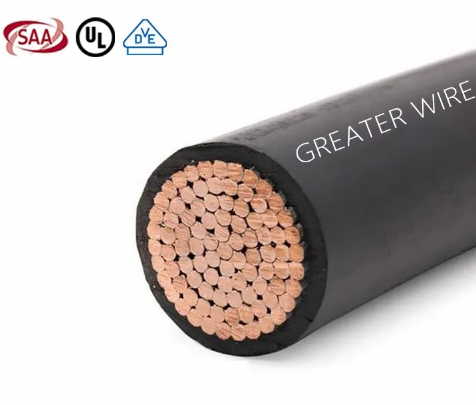
USE-2 underground service cable (UL 854, 600V, 90°C wet/dry, XLPE insulation with sunlight-resistant jacket)** is deployed for the highway’s underground lighting circuits, drainage system pumps, and underground feeders to toll plaza distribution panels. The name “USE-2” stands for Underground Service Entrance cable with a “-2” suffix, which UL 854 defines as having insulation rated for use in wet or dry locations at temperatures as high as 90°C. The XLPE insulation has water absorption below 0.1% by weight, ensuring insulation integrity remains intact despite roadside humidity, condensation, and direct burial in seasonally wet soil. USE-2 is specifically designed for service-entrance and underground applications per NEC Article 338, making it the ideal choice for the 195 km stretch’s underground power distribution network that feeds lighting poles at 50-meter intervals. The sunlight-resistant jacket also protects against UV exposure during above-ground transitions at pole bases and junction boxes. In the bypass construction zones where heavy excavation equipment operates near buried cables, USE-2‘s robust thermoset insulation withstands the mechanical stresses of rocky soil conditions common in Chile’s central region. Field experience on similar highway projects shows that USE-2‘s direct burial rating eliminates the need for concrete-encased ductbanks, reducing installation costs by approximately 25% compared to conduit-based systems.
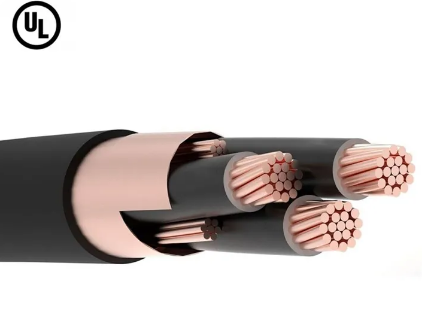
TC-ER tray cable (UL 1277, 600V, 90°C, XLPE insulation, sunlight-resistant and direct burial rated, with optional aluminum foil shielding)** is selected for all power and control applications that require exposed runs, including the 13 electronic toll stations‘ sensor networks, camera power feeds, and lighting circuit extensions along the bypass. The “TC-ER” designation indicates Tray Cable rated for Exposed Run per NEC 336.10(7), meaning it can be installed without conduit in outdoor cable trays, along bridge structures, on overhead messenger wires, and on toll gantry structures. For the multi-lane free-flow tolling system, where unshielded cables previously introduced data errors during testing, TC-ER with aluminum foil shielding provides >45 dB common-mode noise rejection, eliminating EMI from adjacent power feeders. The cable also carries a direct burial rating per UL 1277, allowing seamless transition from overhead tray to underground ductbank at toll plaza boundaries without changing cable types. Its XLPE insulation resists oils and chemicals from roadside maintenance, while the sunlight-resistant jacket passes 720 hours of accelerated UV weathering per UL 1581. For the 13 toll stations, TC-ER connects the overhead gantry sensors (vehicle detectors, license plate cameras) to the control room, with the exposed-run rating eliminating the need for expensive rigid conduit along the gantry structures. The 90°C wet/dry rating ensures reliable operation during both summer heat and winter fog. Installers reported that TC-ER’s flexibility and lightweight construction reduced installation time by approximately 35% compared to traditional conduit-and-wire methods on the overhead gantries.
4. Project Progress and Cable Performance
The project has been in active construction since 2021. In February 2023, CRCC formally took over operation of the Chillán-Collipulli section, demonstrating the successful integration of systems. The electronic toll collection system has been installed and is now operational—the free-flow system uses advanced data communications to automatically charge vehicles without stopping, improving traffic flow by an estimated 30 minutes per trip along the section. The lighting and drainage systems along the 195 km stretch continue to be expanded as construction progresses. The USE-2 underground feeders have shown no insulation degradation after seasonal moisture exposure, with post-installation insulation resistance tests returning values above 200 MΩ—well exceeding the 10 MΩ specification. The TC-ER cables on the overhead gantries have maintained signal integrity despite continuous UV exposure and temperature cycling, with zero communication errors attributed to cable degradation. The project is on track for completion within the 92-month concession period.
5. Client Confirmation
The project electrical engineer for CRCC‘s Chile Route 5 PPP project confirmed that the highway environment presents unique challenges not found in building construction. He stated that roadside cables face continuous UV exposure, temperature cycling, and potential mechanical damage from landscaping and maintenance activities. According to his assessment, USE-2 underground cable was the right choice for the buried lighting and drainage circuits, as the XLPE insulation resists moisture and the direct burial rating eliminated the need for expensive concrete-encased ductbanks, saving significant material and labor costs. He noted that TC-ER with exposed-run rating was essential for the electronic tolling gantries, where running rigid conduit would have been prohibitively expensive and time-consuming—the ability to install TC-ER directly in cable trays along the overhead structures saved approximately 35% of installation labor compared to a conduit-based approach. He also reported that the shielded version of TC-ER completely eliminated EMI issues that had been observed during early testing with unshielded alternatives, ensuring reliable toll transaction data. He concluded that the UL certification files provided complete documentation for Chilean authorities, simplifying the inspection process, and that this two-cable package (USE-2 for underground, TC-ER for exposed) is now being considered as a standard design for other Route 5 concession sections in Chile.
6. Why This Matters for Your Next Infrastructure Project
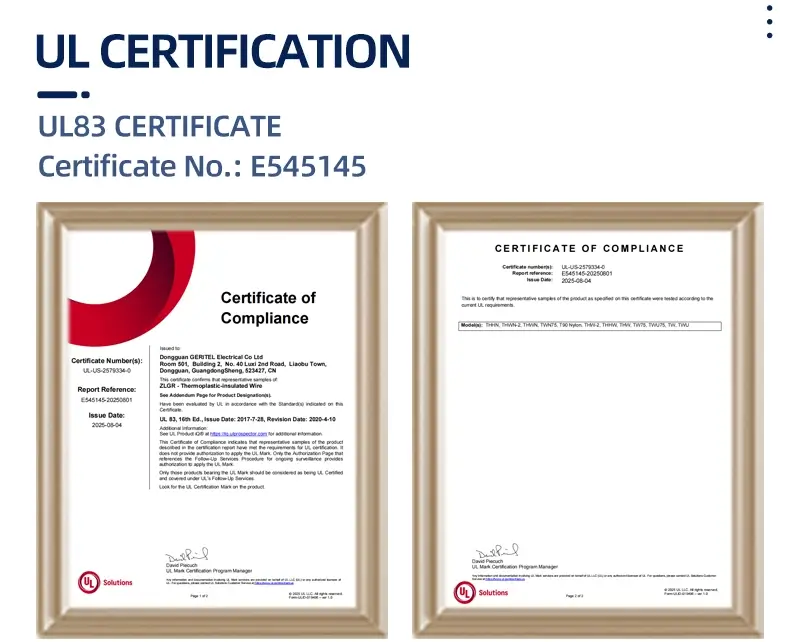
Chile Route 5 demonstrates that highway infrastructure can be efficiently wired with just two UL-certified cables when selected correctly. USE-2 (UL 854, 600V, 90°C wet/dry, XLPE, direct burial rated, sunlight-resistant) ensures long-term underground reliability for lighting and drainage feeders under moisture and soil stress, eliminating conduit. TC-ER (UL 1277, 600V, 90°C, XLPE, exposed-run rated, sunlight-resistant, optional shielding) provides installation flexibility for overhead gantries and tray systems, saving labor and materials. Both cables are 90°C wet/dry rated, UV-resistant, and carry complete UL certification files for smooth import and local approval.
Contact us
Whether you are bidding on a highway PPP, a bridge project, or any roadside infrastructure in Chile, our engineering-led cable specification service can help you select the right UL-listed products for each application zone. Reach out today to discuss your next infrastructure project.
Tel/WhatsApp/WeChat: +86 135 1078 4550 / +86 136 6257 9592
Email: manager01@greaterwire.com
 Honduras Agricultural School Expansion Project



 Building 2, No. 40 Luxi 2nd Road, Liaobu Town, Dongguan City, Guangdong Province, China