


 Home
HomeCan XHHW-2 Wire Replace THHN Cable?
 GERITEL
 Mar 24,2026

In real-world electrical engineering and procurement projects, professionals often face a practical yet critical question: can XHHW-2 Wire be used as a direct wire replacement for THHN Cable, especially when project conditions vary across temperature, humidity, and installation environments. The short and technically accurate answer is that replacement is not universally interchangeable, as it depends heavily on installation scenarios, compliance requirements, and performance expectations rather than simple specification matching.
Both XHHW-2 Wire and THHN Cable are widely used UL-certified building wires in North America and international markets, and while they may appear similar in conductor design and voltage rating, their differences in insulation material, jacket material, and environmental resistance significantly influence their suitability. To make an informed decision, a deeper structural and regulatory comparison is essential, which will be explored in detail below.
1. Breaking Down the Structure: Insulation Material and Jacket Material Differences
Understanding the structural composition of each cable type is the foundation for evaluating any potential wire replacement, as performance is directly determined by insulation material and jacket material.
1. 1 THHN Cable Structure Explained
THHN Cable (Thermoplastic High Heat-resistant Nylon-coated) is designed with a copper or aluminum conductor, typically stranded or solid depending on application, surrounded by a PVC insulation layer that provides basic electrical insulation and moderate heat resistance. Over this insulation, a nylon jacket material is applied, which enhances mechanical protection, abrasion resistance, and ease of pulling through conduits.
From a performance perspective, THHN is rated for 90°C in dry locations and generally downgraded to 75°C in wet environments, depending on installation standards. Its design aligns with UL-certified under UL83, making it a reliable and cost-effective solution for standard indoor wiring where environmental stress is limited.
1. 2 XHHW-2 Wire Structure Explained
In contrast, XHHW-2 Wire (Cross-Linked Polyethylene High Heat-resistant Water-resistant) features a conductor similar in composition but utilizes XLPE (cross-linked polyethylene) as its insulation material, which fundamentally changes its thermal and chemical performance. Unlike PVC, XLPE offers superior molecular stability, resulting in enhanced resistance to heat, moisture, and chemical exposure.
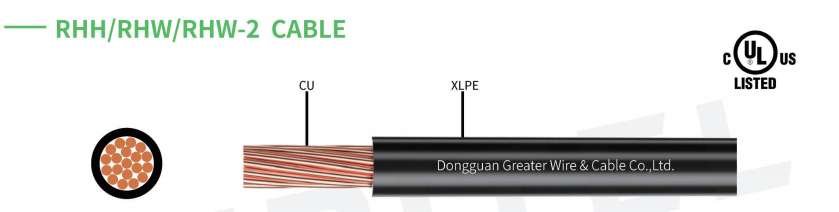
The outer layer of XHHW-2 does not rely on a separate nylon coating; instead, its jacket material is integrated into the insulation system, providing a thicker and more durable protective barrier. This structure allows XHHW-2 to maintain a 90°C rating in both dry and wet locations, making it significantly more versatile in demanding environments—such as those requiring XHHW-2 cable for feeder circuits. It complies with UL-certified under UL44, which specifically addresses thermoset-insulated wires.
2. UL Certification Matters: Compliance Behind Safe Wire Replacement
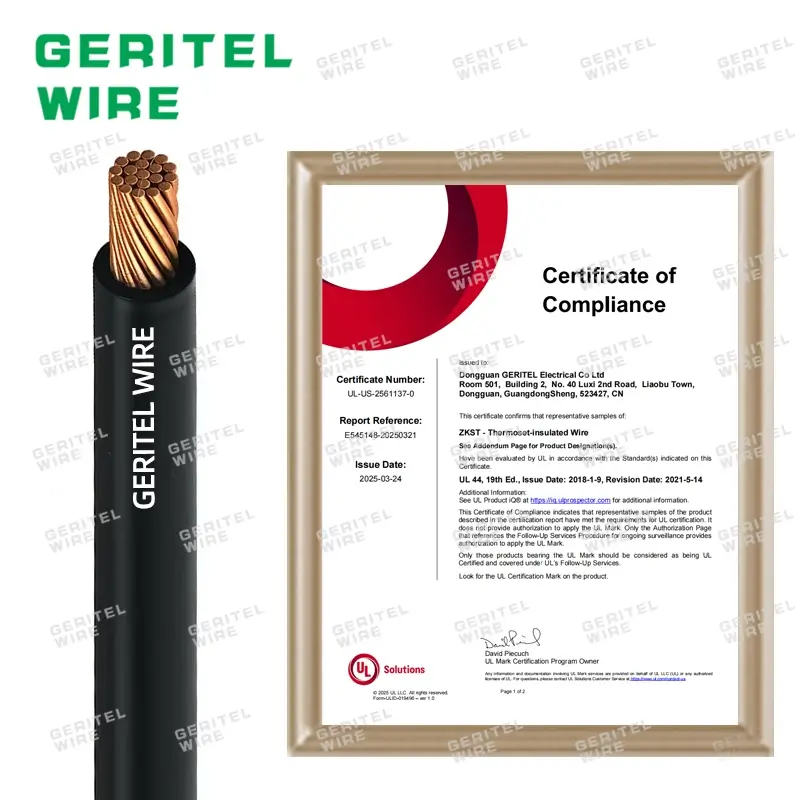
When evaluating whether XHHW-2 Wire can replace THHN Cable, the most critical factor is not just performance, but compliance with UL-certified and installation codes such as NEC (National Electrical Code).
THHN Cable is certified under UL83, which governs thermoplastic-insulated wires and defines its allowable use in primarily dry or limited wet environments. On the other hand, XHHW-2 Wire falls under UL44, a standard for thermoset-insulated conductors that are engineered for higher durability, moisture resistance, and broader environmental adaptability—key attributes for applications like XHHW electric cable for HVAC systems.
These certification differences directly affect:
- Temperature ratings: XHHW-2 maintains 90°C in both wet and dry conditions, while THHN may be restricted in wet environments
- Installation compliance: Certain NEC sections require specific insulation types based on location conditions
- Electrical safety margins: XLPE insulation provides better dielectric strength and lower insulation degradation over time
Therefore, a valid wire replacement must ensure that the selected cable meets or exceeds the UL-certified standard required for the installation scenario, rather than simply matching voltage or conductor size.
3. When Replacement Works—and When It Doesn’t: Scenario-Based Analysis
Rather than treating replacement as a binary decision, it is more accurate to evaluate whether XHHW-2 Wire can replace THHN Cable based on specific application scenarios.
3. 1 When XHHW-2 Wire Can Replace THHN Cable
In environments where higher durability is required, XHHW-2 is often a superior wire replacement, particularly in:
Wet or humid locations, where THHN’s limitations become apparent
High-temperature installations, such as industrial facilities or rooftop conduit systems
Chemical exposure environments, including manufacturing plants or processing facilities
Projects requiring longer service life, where XLPE insulation reduces aging and cracking
In these cases, XHHW-2 not only replaces THHN but provides enhanced safety margins and longer operational reliability.
3. 2 When THHN Cable Should Not Be Replaced
However, there are still scenarios where THHN Cable remains the more practical choice, such as:
Residential wiring projects, where environmental stress is minimal
Tight conduit installations, where the thinner nylon jacket improves pulling efficiency
Cost-sensitive projects, where performance advantages of XHHW-2 are not required
Standard commercial lighting and control systems, where THHN already meets all compliance needs
3. 3 Balanced Conclusion
Ultimately, there is no absolute superiority between XHHW-2 Wire and THHN Cable, as the decision depends entirely on matching insulation material performance and UL-certified compliance with the real-world installation environment.
4. Real-World Applications: Choosing the Right Cable for Each Scenario
To better visualize the decision-making process, it is useful to map each cable type to its most common application scenarios.
4. 1 Typical Applications of THHN Cable
THHN Cable is widely used in:
- Residential electrical wiring systems
- Commercial lighting installations
- Control panels and switchboards
- Indoor conduit systems with stable environmental conditions
Its lightweight structure and cost efficiency make it a standard choice for general-purpose wiring.
4. 2 Typical Applications of XHHW-2 Wire
XHHW-2 Wire is more suitable for demanding environments, including:
- Industrial plants and heavy-duty machinery wiring
- Wet mechanical rooms and underground conduit systems
- Outdoor installations exposed to UV and moisture
- Medical or sensitive facilities requiring low leakage current and stable insulation
Its robust insulation material and integrated jacket material ensure long-term performance even under harsh conditions.
5. Make the Right Choice: From Technical Evaluation to Project Success
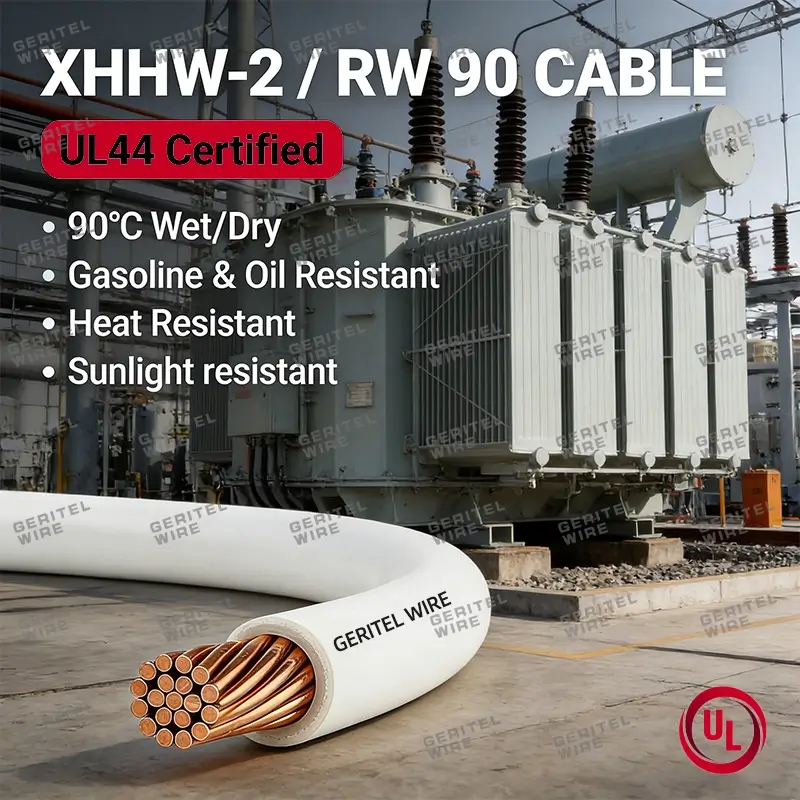
In conclusion, while XHHW-2 Wire can serve as a wire replacement for THHN Cable in many scenarios, especially where enhanced durability, moisture resistance, and thermal stability are required, the decision must always be guided by UL-certified compliance, NEC standards, and actual installation conditions, rather than assumptions of equivalence.
For projects that demand higher protection levels, longer service life, and improved performance under stress, upgrading to XHHW-2 is often a more reliable and future-proof solution, particularly when the insulation material and jacket material must withstand challenging environments.
Contact us today:
At Dongguan GERITEL Electrical Co., Ltd., we manufacture high-quality XHHW-2 Wire that fully complies with UL44 standards, ensuring consistent structure, stable performance, and suitability for a wide range of industrial and commercial applications. Our production process emphasizes strict quality control, reliable raw materials, and engineering-level performance verification to meet global project requirements.
If you are evaluating THHN Cable replacement options or need assistance selecting the right cable for your project, our team is ready to provide technical consultation and customized solutions tailored to your specific application.
Tel / WhatsApp / WeChat: +86 135 1078 4550 / +86 136 6257 9592
Email: manager01@greaterwire.com
Feel free to reach out for detailed specifications, samples, or project-based recommendations, and ensure your wiring system is both compliant and built for long-term reliability.
 XHHW-2 vs USE-2 Wire: Choosing the Right Underground Cable



 Building 2, No. 40 Luxi 2nd Road, Liaobu Town, Dongguan City, Guangdong Province, China