


 Home
HomeAssumption College Makati Rooftop Solar PV Project
 GERITEL
 Apr 16,2026

High above the bustling streets of Makati City, where Metro Manila's financial district meets the quiet dignity of educational heritage, Assumption College Makati stands as a testament to timeless values. Founded over a century ago, this prestigious Catholic institution has shaped generations of Filipino leaders. But in early 2024, its facilities team faced a distinctly modern challenge: how to honor the past while powering the future.
The decision to install a 300kW rooftop solar system wasn't merely about reducing electricity bills. It was a statement of institutional values—a commitment to sustainability that would resonate with students, parents, and the broader community. Yet transforming this vision into reality required navigating a procurement landscape that few academic administrators anticipate. The cables that would carry sunlight-generated electrons through the system needed to perform flawlessly for 25 years, surviving tropical storms, scorching equatorial sun, and the relentless humidity that defines Philippine climate.
What began as a straightforward equipment purchase evolved into a search for manufacturing integrity. The college's engineering consultants specified international-grade cabling infrastructure, but the local market presented a frustrating paradox: plenty of suppliers claimed compliance, yet few could produce the certification documentation that insurance underwriters and utility interconnection engineers demanded.
The Certification Gap: When "Good Enough" Isn't Good Enough
The project electrical engineer, a veteran of commercial installations across Luzon, quickly identified three critical vulnerabilities in the initial procurement plan. Each pointed to the same underlying issue—the gap between marketing claims and verifiable quality.
First, the DC lifeline. The H1Z2Z2-K single-core solar cables—4mm² and 6mm² specifications for string interconnections—needed to satisfy dual certification requirements. The German-engineered inverters carried warranty stipulations demanding TUV Rheinland validation. Meanwhile, MERALCO's interconnection review required UL 4703 compliance for all photovoltaic wiring. Local distributors offered cables with one or the other, sometimes neither, and occasionally presented certificates that didn't match the actual reel markings.
The technical specifications were uncompromising: H1Z2Z2-K rated for DC1500V/AC1000V, operating temperatures from -40°C to +90°C with 120°C short-circuit tolerance. The 1×4mm² primary specification demanded 56 tinned copper strands, 5.5mm outer diameter, conductor resistance ≤5.09Ω/km, and 6x bending radius flexibility. AD8 waterproof rating wasn't negotiable for rooftop exposure, and the 25-year design life needed to match the silicon modules themselves.
Second, the AC transition. The path from rooftop inverters to the main distribution board—80 meters of conduit through humid air and direct sunlight—required THHN single-core conductors: 10 AWG (5.26mm²) for inverter outputs and 2 AWG (33.6mm²) for the main AC distribution. Here, the local market confusion between THHN and generic THW-2 variants created real risk. The former carries 90°C wet/dry ratings and UV-resistant nylon jacketing; the latter, while cheaper, would degrade within seasons when exposed to Makati's intense solar radiation.
Voltage drop calculations added pressure. The college's chief engineer needed precise assurance that conductor sizing wouldn't sacrifice system efficiency across that 80-meter run. Conservative assumptions pushed toward oversized conductors; economic realities demanded optimization.
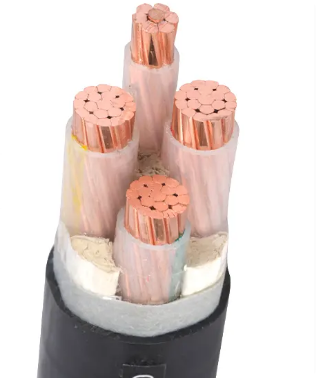
Third, the power backbone. The utility service entrance upgrade—XLPE power cable 4×70mm² for the 400A main supply and XLPE power cable 4×35mm² feeding the solar-ready switchgear—represented the project's electrical foundation. Philippine contractors frequently encounter armored cable in this category, but the rooftop application demanded unarmored, sunlight-resistant XLPE power cable with cross-linked polyethylene insulation rated for 0.6/1kV continuous operation. The specification narrowed the supplier pool dramatically.
Then came the timeline shock. The regional distributor initially selected indicated 12-week lead times for the complete bill of materials. With the dry season installation window closing and academic calendar constraints limiting construction to semester breaks, the project manager faced an unenviable choice: delay commissioning into the rainy season, or compromise on cable quality.
Engineering Partnership: Beyond Supplier to Solution Architect
Our engagement with Assumption College began unconventionally. Rather than requesting a purchase order, our technical team asked for the single-line diagram. This wasn't bureaucratic delay—it was the entry point to value engineering that would ultimately reduce material costs while enhancing system reliability.
The H1Z2Z2-K specification review revealed immediate optimization potential. The original design called for 6mm² conductors throughout all string homeruns. Our engineers modeled the actual installation conditions: 35°C ambient roof temperature, 10A per string current, and circuit lengths predominantly under 25 meters. The analysis demonstrated that H1Z2Z2-K 4mm²—with its 56-strand tinned copper Class 5 conductor construction and electron-beam cross-linked XLPO double insulation—could handle these loads with acceptable voltage drop when properly derated. The switch saved 18% on DC cabling costs without sacrificing the 25-year service life or the critical certifications: TUV (R50212528) and UL 4703.
For the AC infrastructure, we provided more than reels of wire. Our THHN 10 AWG (5.26mm²) and 2 AWG (33.6mm²) conductors arrived with dual UL 83 and CSA C22.2 certifications, 90°C wet/dry ratings, and nylon jacket compounds tested to 3000 hours UV exposure per UL 2556. Crucially, we delivered IEEE 141-compliant voltage drop calculations proving the 2 AWG specification sufficient for the actual circuit length—correcting the common Philippine industry tendency to oversize to 1/0 AWG based on conservative assumptions.
The XLPE power cable 4×70mm² requirement demanded manufacturing agility. While competitors quoted standard armored variants, our production team expedited unarmored, sunlight-resistant XLPE power cable through specialized extrusion lines. The XLPE power cable 4×70mm² and XLPE power cable 4×35mm² configurations underwent IEC 60502-1 type testing, including 4-hour 90°C heating cycles and partial discharge measurements below 5pC at 1.73U0. The XLPE insulation incorporated tree-retardant additives specifically formulated for tropical humidity—details that matter when cables are expected to perform for decades in Makati's climate.
System integration completed with H07V-K single-core 1×2.5mm² and 1×6mm² flexible cables for inverter terminal connections and grounding, plus Royal cord 3×2.5mm² for maintenance receptacles. Every conductor carried traceable certification: VDE for H07V-K, Philippine Standard PS for Royal cord—eliminating the documentation gaps that plague multi-vendor procurement.
Inside the Product: Why Construction Details Determine Destiny
Tropical rooftop environments accelerate cable aging through mechanisms invisible to casual inspection. Assumption College's installation faces ambient temperatures reaching 38°C, 85% relative humidity, and UV intensity that degrades standard materials within seasons rather than decades. Our product architecture addresses these realities at the molecular level.
The H1Z2Z2-K solar cables utilize electron-beam cross-linked polyolefin insulation—distinct from cheaper silane-crosslinked alternatives. This manufacturing difference manifests in accelerated aging tests: our cables maintain 80% of initial elongation after 10,000 hours at 135°C, equivalent to 25 years of rooftop service. The Class 5 tinned copper conductor construction—56 strands in the 4mm² specification—provides the flexibility for tight routing while the tinned surface prevents oxidation in humid environments.
Color coding serves functional safety. The black/red dual-color H1Z2Z2-K configuration ensures polarity clarity during installation and maintenance, reducing the risk of reverse-connection faults that can damage inverters or create arc hazards. The weatherproof outer sheath, rated AD8 for continuous water immersion resistance, provides defense against the driving rains of Philippine monsoon seasons.
For THHN applications, the nylon jacket serves dual purposes. During installation, it withstands 200N abrasion resistance per UL 1581—critical when pulling through EMT conduits across 80-meter runs. In service, the UV-stabilized compound prevents the cracking and brittleness that afflict PVC-only alternatives, eliminating the need for additional conduit protection that would add cost and installation complexity.
The XLPE power cable 4×70mm² employs triple-extrusion manufacturing to ensure insulation concentricity around the compacted stranded copper conductors. This precision prevents electric field concentration points that initiate water treeing—the microscopic defects that grow through XLPE in humid conditions, eventually causing insulation failure. The result is a service entrance cable that matches the 25-year system design life, not merely the minimum code requirement.
H07V-K flexibility proves essential in modern inverter installations. The fine-stranded Class 5 construction permits bending radii tight enough for SMA and Huawei inverter terminal compartments, where space constraints challenge installation quality. The 450/750V VDE certification and oil resistance per EN 60811-404 accommodate the thermal and chemical environment inside IP65-rated inverter enclosures.
Delivering Certainty: 28,700 Meters, 26 Days, Zero Documentation Queries
The consolidated shipment from our Dongguan manufacturing facility represented integrated production capacity meeting urgent project needs:
• H1Z2Z2-K 4mm²: 12,000 meters (black sheathing with red polarity identification, TUV R50212528 & UL 4703 certified)
• H1Z2Z2-K 6mm²: 8,500 meters (black sheathing with blue polarity identification)
• THHN 10 AWG (5.26mm²): 3,200 meters (black/white/green phase coding)
• THHN 2 AWG (33.6mm²): 1,800 meters (black phase, green equipment ground)
• XLPE power cable 4×70mm²: 420 meters (four-core with reduced neutral, steel tape transit protection)
• XLPE power cable 4×35mm²: 380 meters
• H07V-K 1×2.5mm²: 1,500 meters (multi-color control circuit identification)
• H07V-K 1×6mm²: 800 meters (green/yellow protective earth)
• Royal cord 3×2.5mm²: 600 meters (flexible equipment supply)
Total: 28,700 meters on steel and wooden reels, desiccant-protected against maritime humidity, loaded in a single 40-foot high-cube container with customs pre-clearance documentation prepared 72 hours before vessel departure.
The 26-day door-to-door timeline—purchase order confirmation through Manila warehouse delivery—contrasted sharply with the 84-day industry standard for mixed-certification cable orders. This acceleration enabled the EPC contractor to advance commissioning by three weeks, capturing favorable net metering rates before regulatory period closure.
Upon arrival, our technical liaison conducted collaborative reel inspection with the project electrical foreman. We verified H1Z2Z2-K conductor diameter tolerances (±0.1mm), insulation thickness (minimum 1.2mm for 4mm² specification), and XLPE power cable 4×70mm² phase continuity—transforming receiving inspection from adversarial checkpoint to shared quality confirmation.
Measured Success: Six Months of Silent Performance
Post-commissioning assessment in January 2025—six months after energization—revealed the dividends of specification integrity:
• Zero cable-related commissioning delays or insulation resistance failures (all megger readings >1000 MΩ at 1000V DC)
• 0.3% system DC wiring losses, substantially below the 1% design allowance, attributed to optimized H1Z2Z2-K sizing and low-resistance connections
• First-pass MERALCO interconnection approval, with no cable documentation queries or inspection corrections
• Academic calendar preservation—installation completed within semester break constraints without campus disruption
The facilities director's feedback, summarized from project closeout discussions, emphasized the consolidated sourcing value: "We avoided the certificate chase that delayed our previous renewable attempts. One contact, one container, one complete documentation package."
This efficiency translated to risk reduction. With H1Z2Z2-K carrying TUV (R50212528) and UL 4703 certifications, THHN backed by UL 83, and XLPE power cable validated to IEC 60502-1, the college's insurance underwriters required no additional testing or waivers. The 25-year cable warranties align with module and inverter guarantees, creating consistent asset protection.
The GERITEL Difference: Manufacturing Scale Meets Technical Intimacy
Assumption College Makati represents our operational philosophy for Philippine solar infrastructure: certification transparency as standard practice, sizing optimization as engineering service, logistics integration as commitment.
For EPC contractors, this means reduced procurement administration—single point of contact for nine cable variants spanning DC solar, AC building wire, and medium-voltage power distribution. It means eliminated customs detention risk through complete, pre-validated documentation packages. It means technical backup during installation challenges, with direct access to manufacturing engineers who understand why H1Z2Z2-K bending radius matters in rooftop conduit routing.
For institutional and commercial end clients, it means warranties backed by testable international standards rather than marketing claims. It means cables specified for actual installation conditions—tropical UV, humidity, temperature cycling—not merely theoretical laboratory performance.
Our manufacturing capacity—exceeding 500,000 meters monthly across solar, building wire, and power cable categories—ensures that projects like Assumption College don't compete for allocation with utility-scale orders. The XLPE power cable 4×70mm² and XLPE power cable 4×35mm² for this installation were produced on dedicated extrusion lines without scheduling conflicts, supported by vertical integration from copper rod casting to final reel packaging.
Your Project Deserves the Same Certainty
Whether you're specifying a 50kW commercial rooftop or a 5MW ground-mount array, cable infrastructure decisions resonate across decades of operational life. The Assumption College Makati experience demonstrates that certification-verified manufacturing, technical engagement during specification development, and logistics precision convert procurement from schedule risk into project accelerator.
Dongguan GERITEL Electrical Co., Ltd.
Certified Cable Solutions for Renewable Energy Infrastructure
Connect with our Philippine Solar Team:
Tel/WhatsApp/WeChat: +86 135 1078 4550 / +86 136 6257 9592
Email: manager01@greaterwire.com
 Laguna de Bay Floating Solar Project – Taguig Section



 Building 2, No. 40 Luxi 2nd Road, Liaobu Town, Dongguan City, Guangdong Province, China