


 Home
HomeArgentina Mendoza Bodega Trivento Renewable Energy & Electrical Upgrade
 GERITEL
 Apr 07,2026

In early 2023, I received an email from Argentina. It was from an engineering manager at a winery in Mendoza—they were planning something big, a complete "electrical overhaul" for their facility.
The winery was Bodega Trivento. If you've ever bought Argentine wine, you've probably seen their label. They've been Argentina's top exporter for four consecutive years, owned by Chile's Concha y Toro group, with a massive production base in Maipú, Mendoza. Even more importantly, they're B-Corp certified, which means they have strict standards for sustainability and environmental responsibility.
Their goal was clear: expand their solar system and replace all the aging electrical infrastructure throughout the plant. But there was a catch—tight deadlines, high requirements, and no suitable local suppliers.
What Was Keeping Them Up at Night
After several video calls, I got a clear picture of their situation. It's actually pretty typical for renewable energy projects:
First, the wiring was ancient. Some circuits had been in place for over 15 years, with degraded insulation. Wineries are dusty places with extreme temperature swings—40°C in summer, near freezing in winter. The old cables simply couldn't handle it anymore.
Second, they had to integrate old and new systems. They already had 918 solar panels and were adding 650 more. This meant handling high-voltage DC power (from panels to inverters) while ensuring stable AC distribution—because if the temperature control for the fermentation tanks went down, you're looking at millions of dollars in lost wine.
Third, certification requirements were strict. As a B-Corp company, every supplier needed to provide complete compliance documentation, especially UL certification. Without it, they couldn't pass audits and risked losing export market access.
Fourth, the timeline was brutal. They had to finish everything before the March 2024 harvest season, leaving less than 8 months from order to installation. Local suppliers in Argentina were quoting 3-4 month lead times, with no guarantee of certification compliance.
Bottom line: they didn't just need to "buy some wire." They needed a knowledgeable partner who could respond quickly and deliver reliable products.
How We Worked Through It Step by Step
First things first: What cables did they actually need?
A lot of people think "wire is wire, as long as it conducts electricity," but industrial projects don't work that way. We had several meetings with their electrical engineers, went through every area's power requirements, and came up with this solution:
From solar panels to inverters: PV Wire
This was outdoor, high-voltage DC. Regular wire wouldn't cut it. We supplied PV Wire, 2kV DC rated, XLPE insulated, specifically UV-resistant. This stuff works from -40°C to 90°C, and can be direct-buried or clipped in place—no extra conduit needed, saving significant installation time and cost.
Why not just use cheaper THHN instead? Because THHN is designed for indoor AC use. It doesn't have the double insulation and grounding features of PV Wire. Using it outdoors on a solar system would be a safety hazard waiting to happen.
Inside the facility: THHN Copper Building Wire 600V
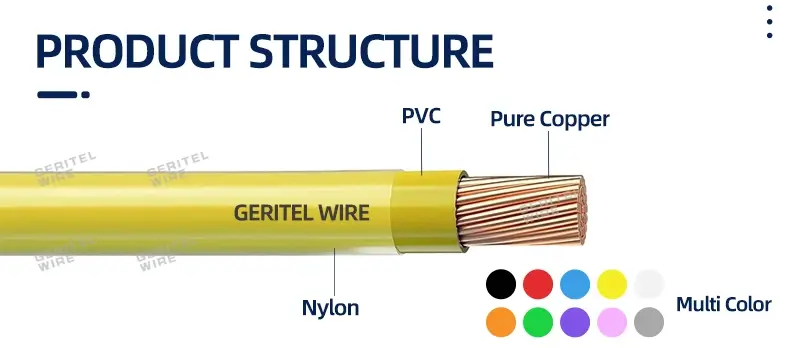
This was the "bloodstream" of the whole project. We supplied THHN copper building wire 600V, ranging from 14 AWG control wiring to 4/0 AWG main feeders. The nylon jacket makes it abrasion-resistant and rated for 90°C, usable both indoors and outdoors.
Mendoza has humidity swings, so the THHN/THWN-2 dual rating came in handy—THHN for dry conditions, automatically switching to THWN mode in wet environments. We insisted on copper rather than aluminum because copper conducts 40% better, reducing voltage drop over long distances in their massive facility.
Main power distribution: XHHW-2
From the main switchgear to sub-panels, carrying 400-amp loads. We used XHHW-2, 350 kcmil and 500 kcmil sizes. The cross-linked polyethylene (XLPE) insulation handles higher temperatures and moisture better than PVC.
Compared to THHN, XHHW-2 is more reliable in wet conditions and has better dielectric strength, allowing smaller conductor sizes for the same current—saving space in crowded mechanical rooms.
Production floor equipment: MC Cable
The bottling hall and barrel storage areas have forklifts running constantly. Regular cables get crushed. We supplied MC Cable, metal-clad, from 12/2 to 4/0 AWG. The interlocked aluminum armor eliminates the need for separate conduit.
This cable has built-in grounding through the armor, making installation about 25% faster than traditional pipe-and-wire methods. The 10 AWG and 8 AWG sizes were perfect for their conveyor systems and pump motors, with plenty of power headroom.
Outdoor auxiliary circuits: UF-B Wire
Irrigation pumps, landscape lighting, security cameras—things that needed to be buried. We supplied UF-B Wire, 12/2 and 10/2 sizes, with sunlight-resistant PVC jackets rated for direct burial.
Compared to pulling THHN through buried conduit, UF-B Wire's integrated construction is simpler and won't fail even if sitting in groundwater long-term.
Automation controls: PLTC / ITC Cable
Modern wineries run on automation—fermentation monitoring, tank controls, energy management, all sensors and controllers. For this, we used PLTC and ITC cable, 16 AWG and 18 AWG multi-conductor, with shielded pairs for noise-sensitive instrumentation.
These are tray-rated, meaning they can run in the same cable trays as power cables without separation requirements, simplifying installation for their upgraded SCADA system.
Our Three Big Advantages—What Really Sealed the Deal
In the end, Trivento chose us for three main reasons:
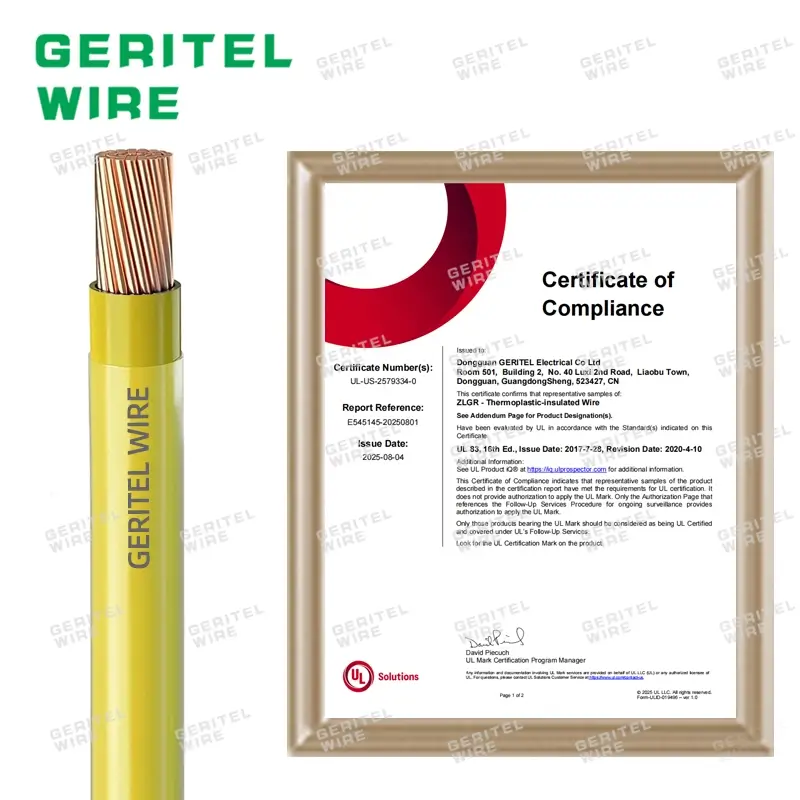
First, Complete UL Certification with Proper Documentation
Every reel had UL certification, and we prepared Spanish-language compliance documents in advance. Argentine customs and local electrical authorities are strict—these documents saved them weeks of clearance time.
As a B-Corp company facing third-party audits annually, our certificates and material reports (including recycled copper content, RoHS environmental compliance) met their disclosure requirements perfectly.
Second, We've Done This Before, We Know the Business
We don't just sell wire. We've supplied projects across five continents, including solar installations and winery upgrades. We showed Trivento similar cases, including a Chilean winery project, and that gave them confidence.
More importantly, our engineers helped with cable sizing calculations, voltage drop verification, and coordinating with their local electricians on aligning NEC standards with Argentine local codes. This technical support is something typical trading companies simply can't provide.
Third, Fast Delivery That Didn't Mess Up Their Schedule
Normally, a big order like this takes 45-60 days to manufacture. We did it in 21 days. We keep raw material inventory specifically for the South American market—copper rod, PVC compounds—ready to go.
For logistics, we coordinated Shanghai to Buenos Aires ocean freight, then inland trucking to Mendoza, door-to-door in 35 days total. We also handled pre-clearance documentation, so there were no demurrage charges when the cargo hit the port.
Installation and Real-World Results
Cables arrived in October 2023. Their electrical team spent three months on installation, with us providing remote video support at key points—like how to terminate MC Cable and match PV Wire MC4 connectors to their inverters.
We packed shipments by construction zone, not by product type. So they could install as each shipment arrived, without digging through boxes on the job site. Every box had Spanish installation guides and certificate copies—inspectors got what they needed immediately, approvals went through first time.
By February 2024, everything was complete. Here's how it went:
• Solar system expanded by 650 panels, total generation capacity up 40%
• Line losses on new circuits reduced by 12%, saving on electricity bills
• Zero electrical incidents during the 2024 harvest season, fermentation temperature control stayed rock solid
• MC Cable in forklift-heavy production areas hasn't had a single issue
• UF-B Wire buried irrigation lines running through rainy season without any leaks or faults
What They Said Afterward
After project completion, their engineering manager emailed saying we "exceeded expectations"—not just on product quality, but on responsiveness and technical support throughout the process. They've submitted our credentials to parent company Concha y Toro, recommending us as an approved supplier for South American operations.
For Trivento, this electrical system now supports their expansion plans for the next decade while fully aligning with their sustainability goals. For us, it's proof that Chinese-manufactured cable, backed by UL certification and professional engineering support, can absolutely meet the supply chain standards of the world's most demanding industrial clients.
If You're Working on Something Similar
Whether you're doing solar, winery upgrades, or other industrial projects, cable selection really isn't something to take lightly. Wrong wire means inefficiency, higher energy costs, safety risks, and project delays.
What we offer isn't just THHN copper building wire 600V, PV Wire, XHHW-2, or any other product—it's end-to-end service from product selection and certification documentation to logistics and delivery. Especially if you have UL certification requirements, tight timelines, or complex projects, talking to us might save you a lot of headaches.
Dongguan GERITEL Electrical Co., Ltd.
Tel/WhatsApp/WeChat: +86 135 1078 4550 / +86 136 6257 9592
Email: manager01@greaterwire.com
Have a project in mind? Get in touch. Our engineering team is always online, ready to handle everything from selection to delivery.
 Belize's Caye Caulker Submarine Power Interconnection Project



 Building 2, No. 40 Luxi 2nd Road, Liaobu Town, Dongguan City, Guangdong Province, China