


 Home
HomeIloilo City Ajuy 62 MW Ground-Mounted Solar Power
 GERITEL
 Apr 16,2026

1. Project Background: A Utility-Scale Solar Plant Under Tropical Stress Conditions
The Ajuy 62 MW ground-mounted solar power project is located in Ajuy, Iloilo Province, Philippines. From an engineering perspective, this is no longer a standard commercial or rooftop solar installation, but a utility-scale energy infrastructure project.
With an installed capacity of 62 MW, the plant is capable of supplying electricity to approximately 25,000 households under normal operating conditions, while also supporting the equivalent energy demand of multiple large industrial facilities running simultaneously.
During design and construction, the project faced multiple overlapping challenges rather than a single technical issue. These included extremely long DC cable runs across large PV arrays, continuous thermal stress caused by high tropical temperatures, salt-laden coastal air affecting insulation aging, high humidity during the rainy season impacting connector reliability, and strict grid interconnection requirements demanding long-term system stability and low transmission losses.
All of these conditions made the cable system not just a component selection issue, but a critical factor determining the long-term performance of the entire power plant.
2. Why This Project Happened Here: Policy, Demand, Grid and Investment Factors Combined
The Ajuy solar project is the result of multiple real-world factors working together rather than a single driver.
From a policy perspective, the Philippine Renewable Energy Act provides tax incentives, streamlined permitting processes, and grid connection support for solar developments, significantly lowering project entry barriers.
From a demand perspective, Iloilo and surrounding regions have experienced continuous growth in industrial and urban electricity consumption, while conventional generation capacity and transmission infrastructure are increasingly under pressure.
From an investment perspective, the Philippines maintains an open environment for foreign participation in renewable energy projects, allowing international capital to flow into solar development with relatively stable regulatory conditions.
From a grid perspective, the Panay Island power network already has the capability to absorb medium-to-large scale solar generation, making 62 MW-level interconnection technically feasible and operationally stable.
Together, these factors created a natural convergence point for utility-scale solar deployment in the region.
3. Cable System Reality: About 325 km of Electrical Backbone
The total cable length used in this 62 MW solar plant is approximately 325,200 meters. If laid end to end, it would be comparable to covering most of the main road network across Iloilo City, which clearly reflects the scale of the project as a full energy infrastructure system rather than a simple generation facility.
The largest portion consists of H1Z2Z2-K photovoltaic DC cables, with 1×4 mm² accounting for around 120,000 meters and 1×6 mm² accounting for about 180,000 meters. These cables form the core DC collection network across the PV array, transmitting power from hundreds of thousands of solar modules to combiner boxes and then to inverters. This section can be considered the “first layer energy nervous system” of the entire plant, where any loss or instability directly affects overall generation efficiency.
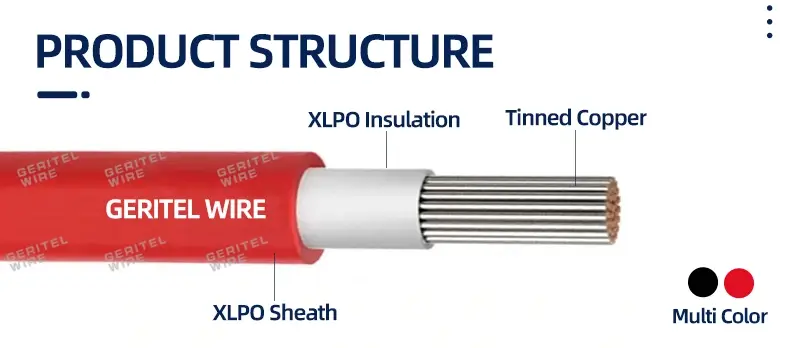
On the AC side, THWN-2 cables are used. The 3×50 mm² cables (approximately 6,500 meters) connect inverters to distribution panels for low-voltage AC transmission, while the 3×95 mm² cables (approximately 5,200 meters) transfer power from distribution panels to step-up transformers. This stage ensures stable and efficient conversion from DC to AC without unnecessary energy loss.
4. Medium Voltage Grid Connection: SWA Armoured Cable as the Critical Export Path
For the medium-voltage grid connection, the project uses SWA (Steel Wire Armoured) power cables, with specifications of 4×185 mm² and 4×240 mm², totaling approximately 6,000 meters.
The 4×185 mm² cables (around 3,200 meters) are used for the main grid export line, while the 4×240 mm² cables (around 2,800 meters) serve as reinforcement and backup transmission paths. This section acts as the final and most critical export channel of the entire solar plant, responsible for delivering the full 62 MW output safely and efficiently into the Panay regional grid.
Thanks to the XLPE insulation system, the cables maintain high dielectric strength and thermal resistance, while the SWA steel wire armor provides strong mechanical protection against soil pressure, installation stress, and environmental impact. This combination ensures stable long-distance power transmission even under harsh tropical conditions.
5. Control and Grounding System: Small Components, Essential Stability
The control and auxiliary system plays a supporting but essential role in overall plant stability.
H07V-K 2.5 mm² cables (around 3,500 meters) are used for communication between combiner boxes and inverters, enabling real-time operational coordination. H05VV-F 1.5 mm² cables (around 2,200 meters) supply power to instruments and auxiliary equipment. The grounding system uses 16 mm² bare copper conductors (around 1,800 meters) to provide lightning protection and overall electrical safety, ensuring stable operation even under extreme weather conditions.
6. Certification and Engineering Confidence
All H1Z2Z2-K photovoltaic cables supplied by Dongguan GERITEL Electrical Co., Ltd. are certified under CE, TUV, and ISO9001 systems, with certificate numbers CE123456 and TUV7891011, ensuring full compliance with IEC standards for international solar projects.
This level of certification is particularly important for utility-scale EPC contractors, as it directly impacts project approval, inspection, and long-term operational compliance.

7. Real Installation Performance Feedback
During actual installation, the cables demonstrated strong adaptability to field conditions. Contractors reported that the H1Z2Z2-K cables maintained good flexibility during long-distance laying, remained stable under high-temperature conditions, and showed consistent performance in humid rainy-season environments.
Connector stability was also noted as a strong advantage, helping reduce rework and maintenance frequency during construction, which contributed to smoother overall project execution.
8. System Value: More Than Just Cable Supply
Overall, the cable system in this project is not just a material supply package but a complete energy transmission architecture.
From DC collection through H1Z2Z2-K cables, to AC conversion via THWN-2, and finally grid export through SWA armored medium-voltage cables, each layer represents a critical energy transition stage. The stability of these interconnected systems directly determines the long-term efficiency and reliability of the entire 62 MW solar plant.
9. Conclusion and Call to Action
The Ajuy 62 MW solar power project is a clear example of how utility-scale renewable energy infrastructure depends not only on solar panels, but also on the reliability of the entire electrical transmission system.
The combination of H1Z2Z2-K photovoltaic cables and SWA armored medium-voltage cables forms a complete and stable power delivery pathway from generation to grid connection, ensuring long-term operational efficiency, safety, and maximum energy yield throughout the project lifecycle.
Dongguan GERITEL Electrical Co., Ltd.
Tel/WhatsApp/WeChat: +86 135 1078 4550 / +86 136 6257 9592
Email: manager01@greaterwire.com
 Philippine Vaccine Production Plant Construction



 Building 2, No. 40 Luxi 2nd Road, Liaobu Town, Dongguan City, Guangdong Province, China