


 Home
HomeWhat Makes a Factory Automation Wiring System More Efficient and Reliable?
 GERITEL
 Jun 16,2026

Modern factories are evolving fast. Production lines are reconfigured weekly. New machines are added. Old ones are relocated. Sensors, actuators, robots, and controllers are packed into tighter spaces than ever before. And somewhere in the middle of all this, someone has to run the cables.
If you have ever been that someone, you already know the problem. Conduits slow you down. Rigid cables fight every bend. Oil and coolant attack the jacket. VFDs and variable-speed drives fill the air with electrical noise that sends sensors into false alarms. And when the line needs to change – which is always – you end up ripping out cables and starting over.
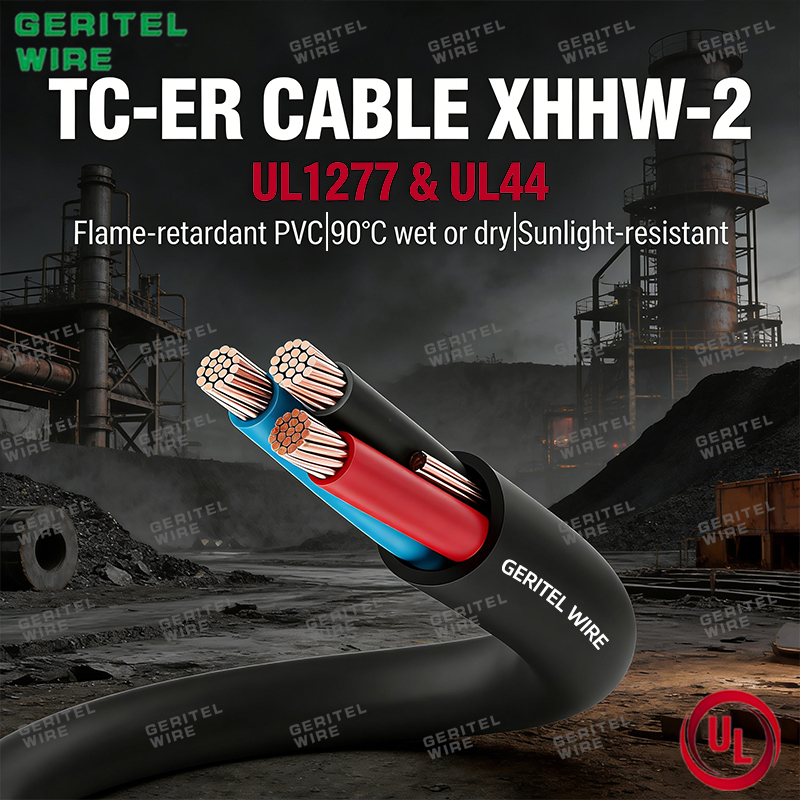
So what makes a factory automation wiring system more efficient and reliable? The answer often comes down to one component that is easy to overlook: the cable itself. Specifically, TC-ER cable with XHHW-2 insulation.
This article explains why TC-ER cable is transforming factory automation wiring – and how to select the right construction for your next automation project.
1.What Makes Factory Automation Wiring Different from Other Industrial Wiring?
Plant floor wiring is not like conduit runs in a commercial building. In a factory, cables have to survive:
- Continuous flexing – robot arms, moving carts, and articulating equipment bend cables thousands of times per shift
- Oil and coolant exposure – cutting fluids, lubricants, and hydraulic oils drip, splash, and pool on the floor – and on the cables
- Heat and vibration – motors run for hours, machines shake, and the ambient temperature can climb well above comfortable levels
- Space constraints – cable trays are packed, and running new conduit often means shutting down adjacent equipment
- Electromagnetic interference – VFDs, welders, and high-power drives create electrical noise that can disrupt nearby sensors and control signals
Standard building wires like THHN struggle in these conditions. The jacket hardens and cracks. The insulation becomes brittle. And you cannot run THHN in open trays without conduit – which means every change requires pipe work.
TC-ER cable was designed for exactly these conditions.
2.How TC-ER Cable Improves Factory Automation Wiring Efficiency
Efficiency in factory automation means three things: fast installation, easy modification, and minimal downtime during maintenance. TC-ER cable supports all three.
First, the "ER" stands for Exposed Run. Under UL 1277 certification, TC-ER cable can be installed in cable trays or on cable ladders without conduit. No pipe bending. No conduit fittings. No pulling wires through long, tight runs. Just lay the cable in the tray, secure it, and terminate it. For a factory floor with dense equipment, this saves days of installation time on a typical project.
Second, TC-ER cables are more flexible than armored cables. The unarmored construction and stranded conductors make them easier to route around obstacles, through tight spaces, and into control cabinets. This reduces the physical effort required during installation and makes cable management cleaner.
Third, modifications become simpler. When a production line changes – and it will – you can pull a TC-ER cable out of the tray, reroute it, or replace it without dismantling conduit runs. This flexibility directly reduces changeover time and production interruption.
Fourth, the XHHW-2 insulation is rated 90°C in both dry and wet locations. It resists oil, chemicals, and abrasion. In a factory environment where coolant and hydraulic oil are everywhere, this insulation holds up where thermoplastic insulation fails. Fewer cable failures mean fewer unplanned shutdowns.
3.Three TC-ER Cable Specifications for Factory Automation Systems
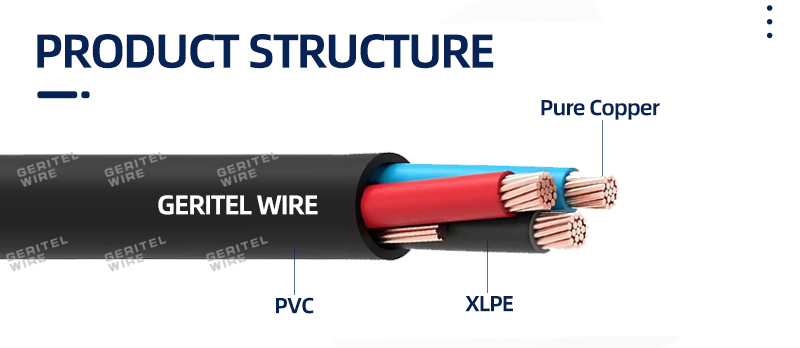
Automation systems have different needs at different points. A control cabinet sensor uses tiny signals. A conveyor motor pulls heavy current. A robotic arm needs flexibility and shielding. Here are three TC-ER cable specifications that cover the most common factory automation wiring needs – and each will appear with a link to its full specification.
Specification 1: 10 AWG 5/C TC-ER Cable – Multi-Conductor Control for Sensor and Actuator Clusters
For automated assembly lines, packaging machines, and material handling systems, you often need to run multiple control circuits to a single station. A 10 AWG 5/C TC-ER cable gives you five insulated conductors in one jacket – enough for multiple sensors, actuators, or interlock signals in a single pull.
The 10 AWG conductors are large enough for 24V DC control circuits with reasonable distance, and the 5/C configuration reduces cable tray congestion compared to running five separate single-conductor cables. The XHHW-2 insulation resists oil and coolant splashes common on automation lines. For environments with moderate EMI, an overall shielded version is available.
Typical applications: Assembly line sensor networks, packaging machine control stations, material handling system interlock circuits.
Specification 2: 4 AWG 4/C Shielded TC-ER Cable – Medium Automation Equipment (Robots, Machining Centers, Conveyor Drives)
Industrial robots, CNC machining centers, and large conveyor drive systems require both power and reliable signal integrity. A 4 AWG 4/C shielded TC-ER cable provides three phase conductors plus a ground, with an overall shield (foil plus drain wire) that blocks electromagnetic interference from VFDs and variable-speed drives.
The 4 AWG conductors handle medium-current motor loads. The overall shield is essential when the cable runs parallel to VFD outputs or passes near sensitive sensors. Without shielding, the electrical noise can cause false triggers, position errors, and nuisance trips. The black PVC jacket is sunlight-resistant, so it works equally well indoors or in outdoor automation areas.
Typical applications: Industrial robot feeders, CNC machining center power, large conveyor drive motors, automated welding systems.
Specification 3: 2 AWG 3/C TC-ER Cable – Heavy Automation Main Power Feeders
For the main power backbone of a large automation cell – feeding a distribution panel, a group of heavy machines, or a long conveyor line – 2 AWG 3/C TC-ER cable provides the necessary ampacity with manageable size. Three conductors for three-phase power, plus a separate ground conductor.
The 2 AWG gauge keeps voltage drop within acceptable limits over longer runs from the main switchgear to the equipment. XHHW-2 insulation maintains its 90°C rating even if the cable passes through warm areas near ovens or heat-treating equipment. Unshielded construction saves cost when EMI is not a primary concern.
Typical applications: Main feeders for large automation cells, power distribution within manufacturing plants, long conveyor system power runs.
When selecting between these three specifications, consider the load type (control signal, medium motor, or heavy feeder), the distance from power source to equipment, and the presence of VFDs or other noise sources. For control circuits with long runs, consider voltage drop; for motor circuits with VFDs, always use shielded TC-ER cable.
3. Installation Practices That Improve Factory Automation Reliability
Selecting the right cable is only half the solution. How you install it determines whether your automation system stays reliable over its life.
Use cable trays or ladder racks properly. TC-ER cable is designed for tray installation. The exposed run rating means you can skip conduit, but you still need to support the cable correctly. Use trays, ladders, or J-hooks designed for industrial environments. Avoid laying cable directly on sharp edges or abrasive surfaces.
Plan for future changes. In factory automation, equipment moves. When you lay out cable trays, leave some spare capacity – both in the tray and in cable length at termination points. This makes future modifications faster and reduces the need to run new cables from scratch.
Separate power and signal cables within the tray. Even with shielded TC-ER power cables, keeping some physical distance between power conductors and sensitive signal cables adds an extra layer of noise immunity. For extreme cases, use physical dividers in the tray.
Protect terminations. The weakest point in any cable system is the termination. Use appropriate strain relief, avoid sharp bends right at the connector, and keep terminal boxes clean and dry. For outdoor or washdown areas, use sealed connectors.
Label everything clearly. In a dense automation system with dozens of cables, clear labeling at both ends saves hours of troubleshooting. It is inexpensive, and it pays for itself the first time a cable needs to be traced.
Keep a record of cable routing. When the system changes two years from now, your maintenance team will thank you for accurate as-installed drawings. It also helps when ordering replacement cable – you will know exactly what gauge, conductor count, and shielding type was originally installed.
3.Common Cable Mistakes in Factory Automation
| Mistake | Consequence | Better approach |
| Using non-shielded cable on VFD-driven automation equipment | EMI trips and false sensor signals | Use shielded TC-ER for VFD circuits |
| Installing THHN in exposed tray | Violates code and risks damage | Use TC-ER with exposed run rating |
| Oversizing cable for control signals | Difficult to terminate, wastes money | Use 10 AWG 5/C for multi-control runs |
| Not planning for future changes | Every modification requires new conduit work | Use tray-installed TC-ER and leave spare capacity |
| Ignoring oil and chemical resistance | Jacket degrades, cable fails early | Specify XHHW-2 insulation |
A common automation pain point: a new conveyor system is installed, but the sensors keep triggering false stops. After days of troubleshooting, the cause is traced to a VFD on the same tray, radiating noise into an unshielded control cable. A simple fix – replacing the unshielded cable with shielded TC-ER – solves the problem. That troubleshooting time costs money and delays production. It is avoidable with the right cable from the start.
FAQ – Factory Automation Wiring with TC-ER Cable
Q1: What makes TC-ER cable different from standard TC cable?
The "ER" (Exposed Run) rating allows TC-ER cable to be installed in cable trays without conduit. Standard TC cable requires conduit for exposed runs. This difference is critical in factory automation, where frequent line changes make conduit impractical.
Q2: Should I use shielded TC-ER cable for all automation wiring?
Not necessarily. Use shielded TC-ER for circuits connected to VFDs, variable-speed drives, or any run that passes near sensitive sensors or controls. For straightforward power feeders without VFDs, unshielded TC-ER is adequate and costs less.
Q3: Is TC-ER cable suitable for moving applications like robotic arms?
TC-ER cable with stranded conductors can handle moderate flexing, but for continuous flex applications (robotic arms, cable carriers), you may need a specialized flex-rated cable. Consult your cable supplier for the specific application.
Q4: Can I mix power and control cables in the same TC-ER cable?
Yes – that is the advantage of multi-conductor constructions like 10 AWG 5/C. However, for circuits with high-voltage power and low-voltage signals in the same cable, verify that the insulation voltage rating is sufficient for all conductors. For sensitive signals, consider individual shielding within the cable.
Q5: Does GERITEL provide UL 1277 certified TC-ER cable for factory automation?
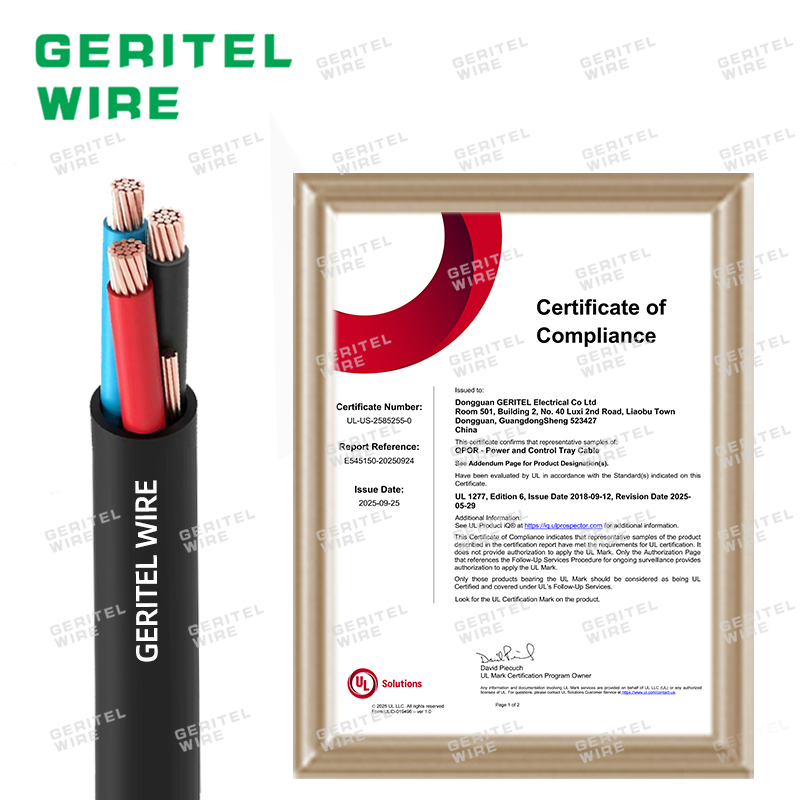
Yes. Dongguan GERITEL Electrical Co., Ltd. holds UL 1277 certification for Power and Control Tray Cable, including TC-ER constructions. We can provide the certificate and file number upon request.
Need a Quote for Your Factory Automation Project?
Our UL 1277 certified TC-ER cable is available in multiple configurations – 10 AWG 5/C for control clusters, 4 AWG 4/C shielded for medium automation equipment, and 2 AWG 3/C for heavy main feeders. We supply cables for automation cells, conveyor systems, robotic workstations, and manufacturing plants.
Tell us your automation system requirements – equipment types, distances, and environmental conditions. We will recommend the right TC-ER cable construction and send you a quick quote.
Contact us
Dongguan GERITEL Electrical Co., Ltd.
Tel/WhatsApp/Wechat: +86 136 6257 9592
Tel/WhatsApp/Wechat: +86 135 1078 4550
Email: manager01@greaterwire.com
Website: www.geritelgroup.com
 How OEM Equipment Manufacturers Select Reliable Electrical Wiring Solutions



 Building 2, No. 40 Luxi 2nd Road, Liaobu Town, Dongguan City, Guangdong Province, China